Annual meeting requirements in Connecticut (CBCA-CT)
Connecticut corporations must hold an annual shareholders' meeting under Conn. Gen. Stat. § 33-695 at a time fixed by the bylaws. The meeting can be replaced by majority written consent under § 33-698, though unanimous consent is required for certain actions.
| Conn. Gen. Stat. § 33-695 | Annual meeting required |
|---|---|
| Conn. Gen. Stat. § 33-698 | Action without meeting |
| Conn. Gen. Stat. § 33-699 | Notice of meeting |
| Conn. Gen. Stat. § 33-708 | Voting |
| Deadline | Each year as fixed by bylaws |
| Written consent | Majority for most actions; unanimous for director elections in some cases |
- Annual meeting under § 33-695 at time fixed by bylaws
- Written consent under § 33-698 generally permits majority consent
- Connecticut follows the MBCA framework with some local refinements
- Notice 10-60 days before the meeting
- Court-ordered meeting available if annual cycle lapses
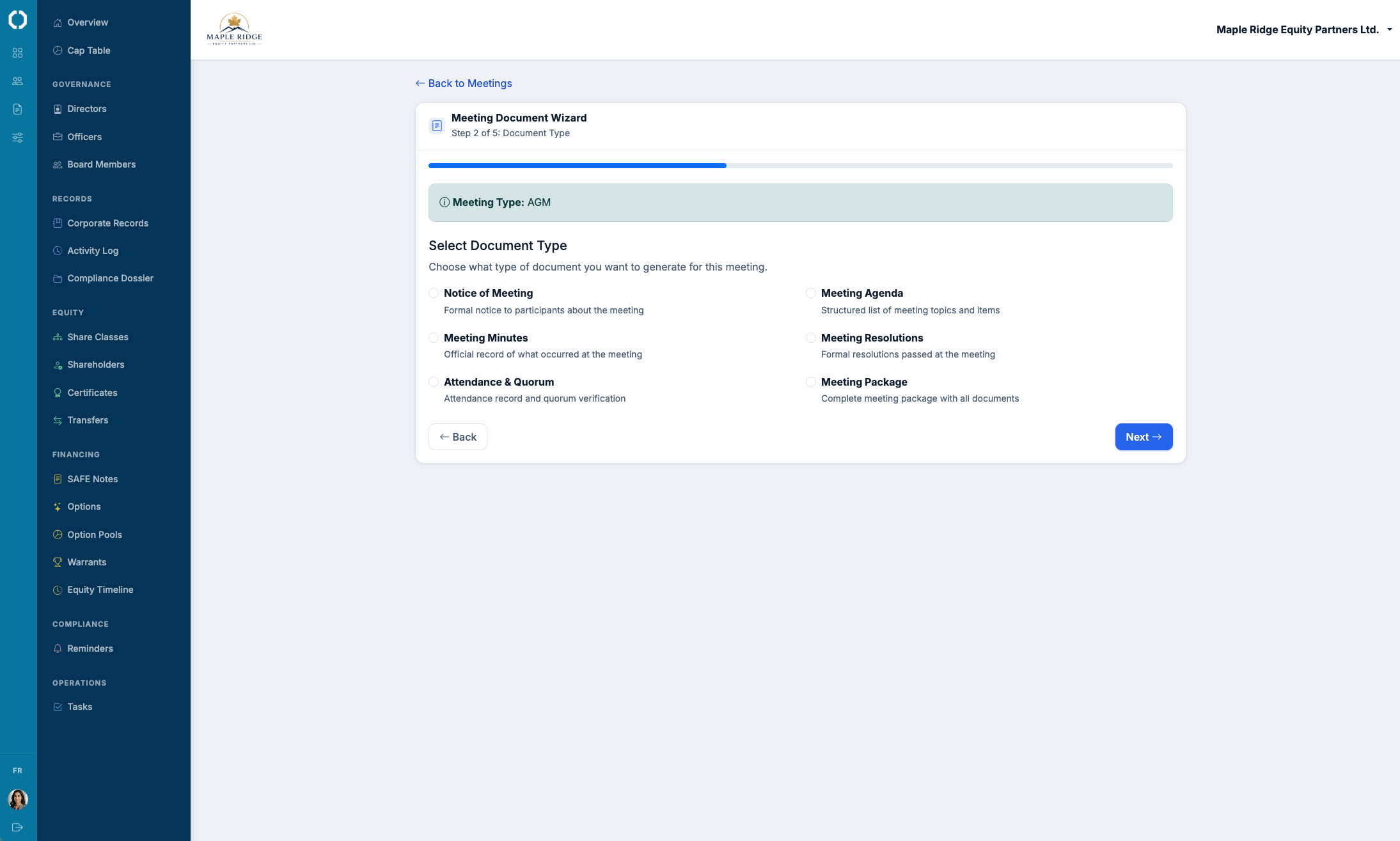
Conn. Gen. Stat. § 33-695 requirements
Section 33-695 of the Connecticut General Statutes requires every Connecticut corporation to hold an annual shareholders' meeting at a time fixed by the bylaws. The meeting elects directors and addresses other proper business. Connecticut adopted the MBCA, so the framework follows MBCA Chapter 7 closely.
Written consent under § 33-698
Connecticut's consent regime under § 33-698 generally follows the MBCA majority-consent approach: shareholders may take action by written consent signed by holders of at least the minimum votes required at a meeting. For most ordinary actions (including director elections in many corporations), majority consent is sufficient. Some specific actions retain unanimous-consent requirements under specific statutory provisions.
Notice and procedural requirements
Notice of the annual meeting must be sent not less than 10 nor more than 60 days before the meeting (Conn. Gen. Stat. § 33-699). Connecticut follows MBCA notice timing closely.
What's distinctive about Connecticut
Connecticut is largely MBCA-aligned for annual-meeting purposes, with the standard majority-consent option for most actions. The state's overall corporate-governance framework is one of the more straightforward MBCA-state regimes, with no distinctive divergences. The forfeiture (rather than dissolution) consequence for missing annual reports adds urgency to corporate-records calendar management, but the substantive annual-meeting requirements themselves are standard MBCA.
Octelligence generates the annual unanimous written consent or meeting minutes for every corporation.
See Digital Corporate RecordsTracked deadlines, jurisdiction-specific templates, electronic written consents.