Annual meeting requirements in Nova Scotia (NSCA)
Nova Scotia companies must hold an annual general meeting under the Companies Act s. 80. Nova Scotia retains the UK-influenced Memorandum-and-Articles framework, so the procedural details differ from CBCA-aligned provinces.
| Companies Act s. 80 | Annual general meeting required |
|---|---|
| Companies Act s. 85 | Notice of meetings |
| Companies Act s. 90 | Quorum |
| Companies Act s. 96 | Resolutions |
| Deadline | Each calendar year (specific timing per articles) |
| Written resolution | Permitted under the company's articles |
- Annual general meeting required under Companies Act s. 80
- Nova Scotia uses Memorandum and Articles of Association (UK-influenced regime)
- Specific meeting timing typically set out in the articles of the company
- Written resolution mechanics depend on the company's articles, not the statute
- Procedural details differ from CBCA-aligned provinces
The Companies Act framework
Nova Scotia's Companies Act (RSNS 1989, c. 81) is unique among Canadian common-law jurisdictions in retaining the UK Memorandum-and-Articles framework. The annual general meeting (AGM) is required under s. 80, but the substantive procedural rules for the meeting (notice periods, quorum, conduct, written resolutions) are largely set out in the company's articles, which follow the historical English convention.
AGM mechanics
Section 80 requires every NS limited company to hold an annual general meeting each calendar year. The specific timing within the calendar year is typically set by the articles. The AGM addresses standard matters: presentation of accounts, election of directors, appointment of auditors. Because the procedural details are article-driven, two NS companies with different articles may have meaningfully different AGM procedures.
Written resolutions and consent
Unlike the CBCA-aligned provinces (where statute provides a clear unanimous-written-consent mechanism), Nova Scotia's written-resolution mechanics depend on the company's articles. The standard NS articles typically permit written resolutions signed by all members entitled to vote, similar to other Canadian provinces, but the specific procedural rules vary by article.
What's distinctive about Nova Scotia
The Memorandum-and-Articles framework is Nova Scotia's defining feature. Counsel familiar only with CBCA-style corporations should expect different procedural patterns: matters that are statute-driven in other provinces are article-driven in NS. The annual general meeting requirement under s. 80 is straightforward, but the detail of how the meeting is conducted depends on each company's articles. For non-routine corporate actions, NS counsel should consult the specific articles rather than relying on CBCA defaults.
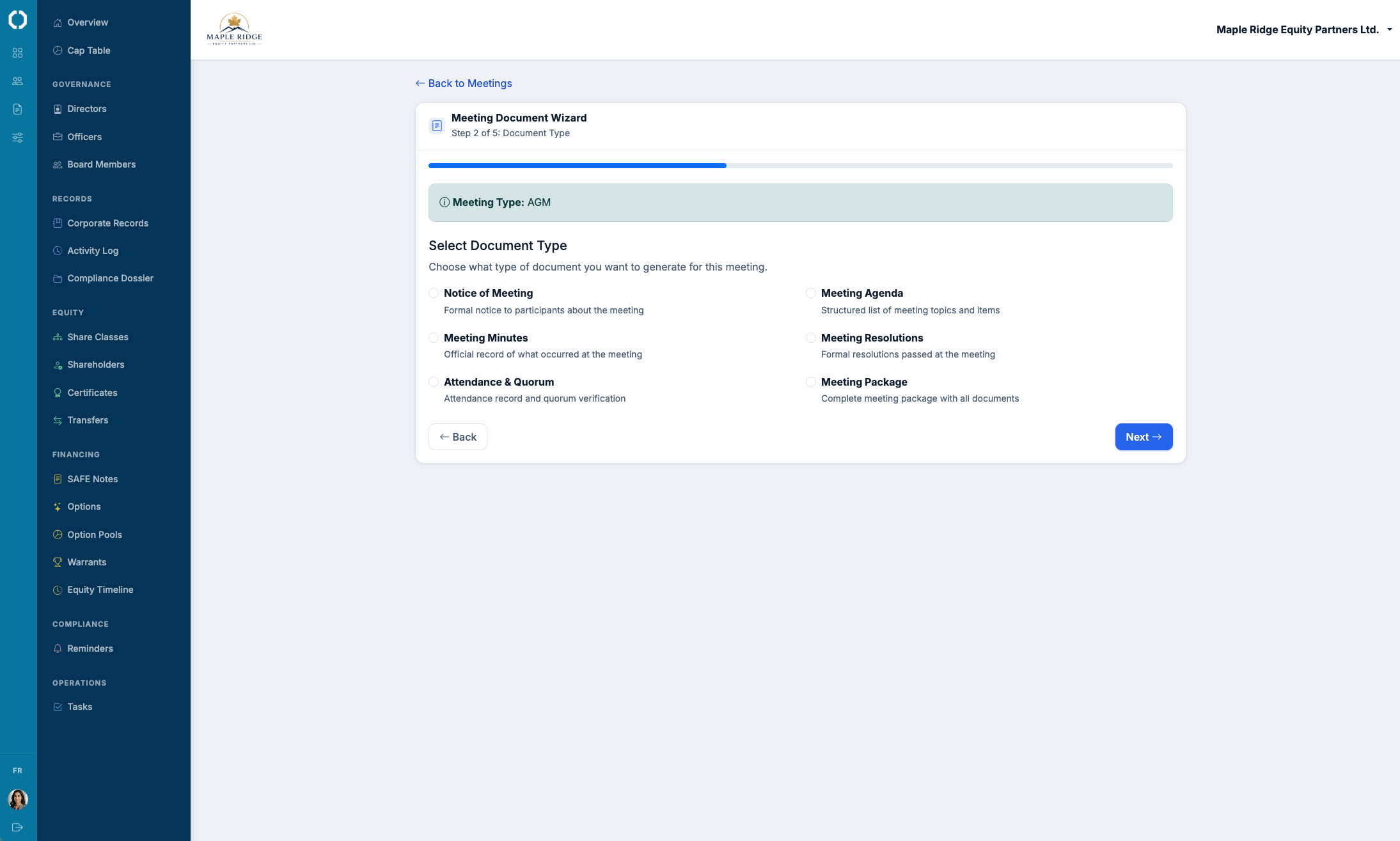
Octelligence generates the annual unanimous written consent or meeting minutes for every corporation, with director election, financial statement approval, and auditor appointment or waiver pre-formatted.
See Digital Corporate RecordsTracked deadlines, jurisdiction-specific templates, electronic written consents, and a complete minute book record.