Directors' resolutions requirements in New Jersey (NJBCA)
What a New Jersey corporation must know about directors' resolutions requirements under New Jersey Business Corporation Act, N.J.S.A. § 14A:1-1 et seq.: statute citations, mechanics, and inspection rights.
| N.J.S.A. § 14A:6-7.1 | Action without meeting |
|---|---|
| N.J.S.A. § 14A:6-7 | Meetings of directors |
| N.J.S.A. § 14A:6-8 | Interested director transactions |
| N.J.S.A. § 14A:6-13 | Duty of directors |
- Action by unanimous written consent in lieu of a meeting is permitted under all 50 states' MBCA-framework statutes
- Effective on the date of the last signature, unless otherwise specified
- Conflict-of-interest rules require disclosure plus safe-harbor approval (disinterested directors or shareholders)
- Resolutions filed in the corporate records; available for shareholder inspection under state rules
- Electronic signatures permitted under each state's UETA-equivalent legislation
What the NJBCA requires
N.J.S.A. § 14A:6-7.1 permits New Jersey corporations to act by unanimous written consent of directors. NJBCA's pre-MBCA heritage shows in some terminology, but the substantive rules are similar.
New Jersey-specific considerations
New Jersey's NJBCA has pre-MBCA heritage, with distinctive procedural language and some structural choices that differ from the Model Business Corporation Act framework. New Jersey counsel should review specific resolution drafts, certificate forms, and inspection demands to ensure compliance with New Jersey-specific rules.
Practical implications
For day-to-day corporate records management in New Jersey, the practical implications are mostly procedural: the corporation's bylaws and NJBCA both apply. The general principles (records must be maintained, shareholders have inspection rights, annual filings are required where applicable) remain similar to other US jurisdictions, but the exact procedural details merit specific New Jersey counsel review.
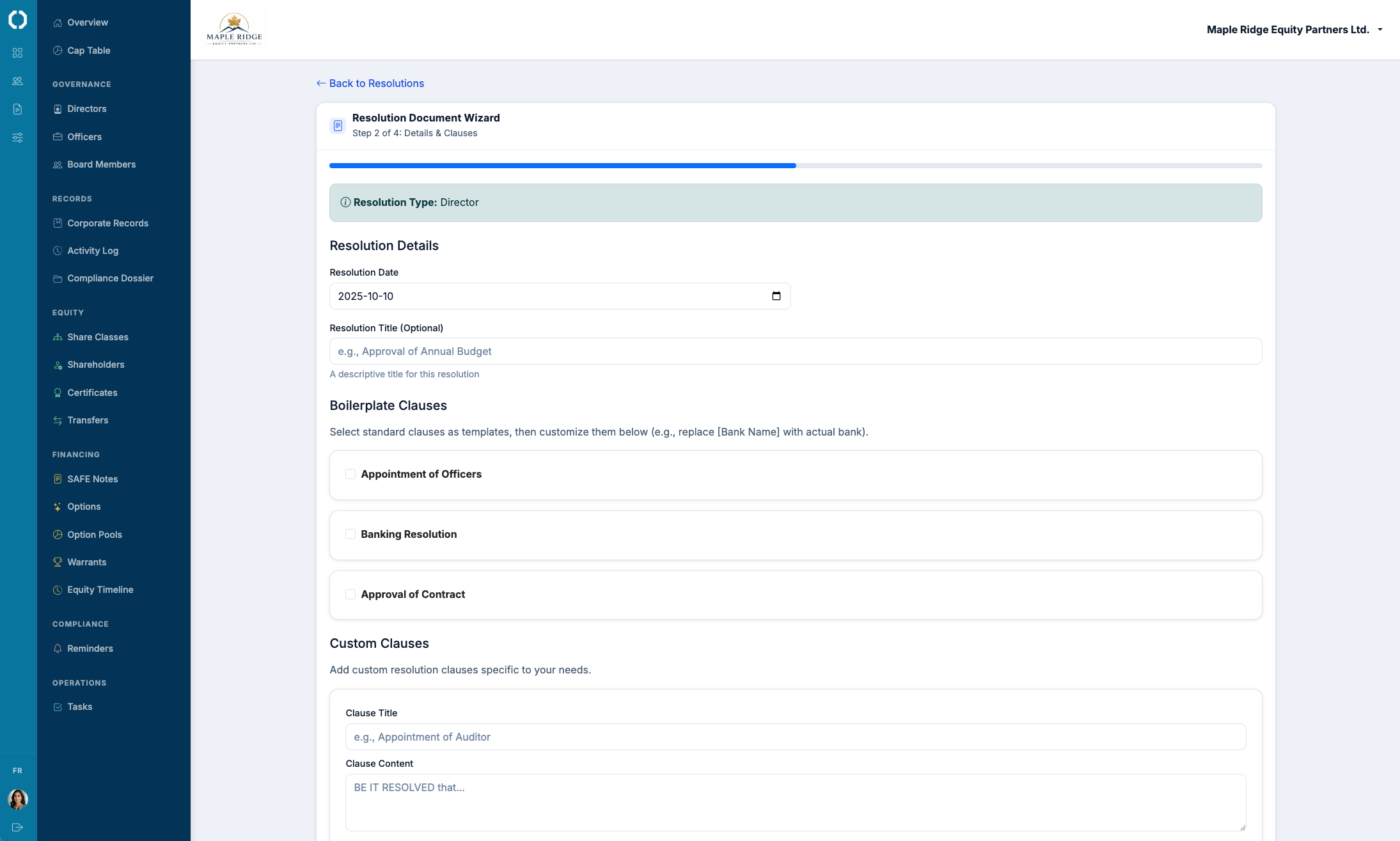
Octelligence provides jurisdiction-specific resolution templates for every common board action. Electronic signatures by all directors, filed automatically to the corporate records.
See Digital Corporate RecordsTemplates per state, electronic signature, complete activity log, every resolution tied to its underlying transaction.