Minute book requirements in Ohio (OGCL)
Ohio corporations maintain corporate records under O.R.C. § 1701.37 and § 1701.38. Ohio's General Corporation Law predates the MBCA and has distinctive provisions, including a notably broad inspection right for shareholders, directors, and creditors.
| O.R.C. § 1701.37 | Required corporate records |
|---|---|
| O.R.C. § 1701.37(C) | Inspection rights |
| O.R.C. § 1701.24 | Share certificates |
| Records location | Principal office of the corporation |
| Inspection rights | Shareholders, directors, and creditors during business hours |
| Distinctive | No routine annual report required for most for-profit corporations |
- Records under § 1701.37: articles, regulations (bylaws), minutes, share register, accounting records
- Ohio uses 'regulations' instead of 'bylaws' as the internal governance document
- Shareholders, directors, and creditors have inspection rights under § 1701.37(C)
- Ohio is the only US state without a routine annual report requirement for most for-profit corporations
- Ohio's GCL pre-dates the MBCA and has distinctive procedural language
What O.R.C. § 1701.37 requires
Section 1701.37 of the Ohio Revised Code requires every Ohio corporation to maintain articles and regulations (Ohio uses “regulations” for what most states call bylaws), minutes of meetings and resolutions, the share register, and accounting records. Records are kept at the principal office.
The broad inspection right under § 1701.37(C)
Ohio's inspection regime is notably broad: shareholders, directors, and creditors all have inspection rights during regular business hours. This is wider than most US states (which typically limit inspection to shareholders, with directors having separate fiduciary-based access rights). The creditor inspection right is particularly distinctive and gives lenders and trade creditors meaningful insight into corporate operations without requiring shareholder cooperation.
The 'regulations' rather than 'bylaws' tradition
Ohio's use of “regulations” rather than “bylaws” reflects the pre-MBCA structure of the Ohio General Corporation Law. The two terms refer to the same conceptual document, but Ohio's terminology can confuse counsel coming from other states. Articles and regulations together constitute the constating documents.
What's distinctive about Ohio
Three features make Ohio distinctive. First, the absence of a routine annual report requirement for most for-profit corporations: Ohio is the only US state with this feature, replacing the annual report with revenue-based Commercial Activity Tax (CAT) filings to the Department of Taxation. Second, the broad inspection right that includes creditors. Third, the pre-MBCA terminology (regulations, not bylaws) and procedural distinctness. Counsel managing Ohio corporations should expect different procedural patterns than MBCA-aligned states, particularly for shareholder meetings, director resolutions, and inspection demands.
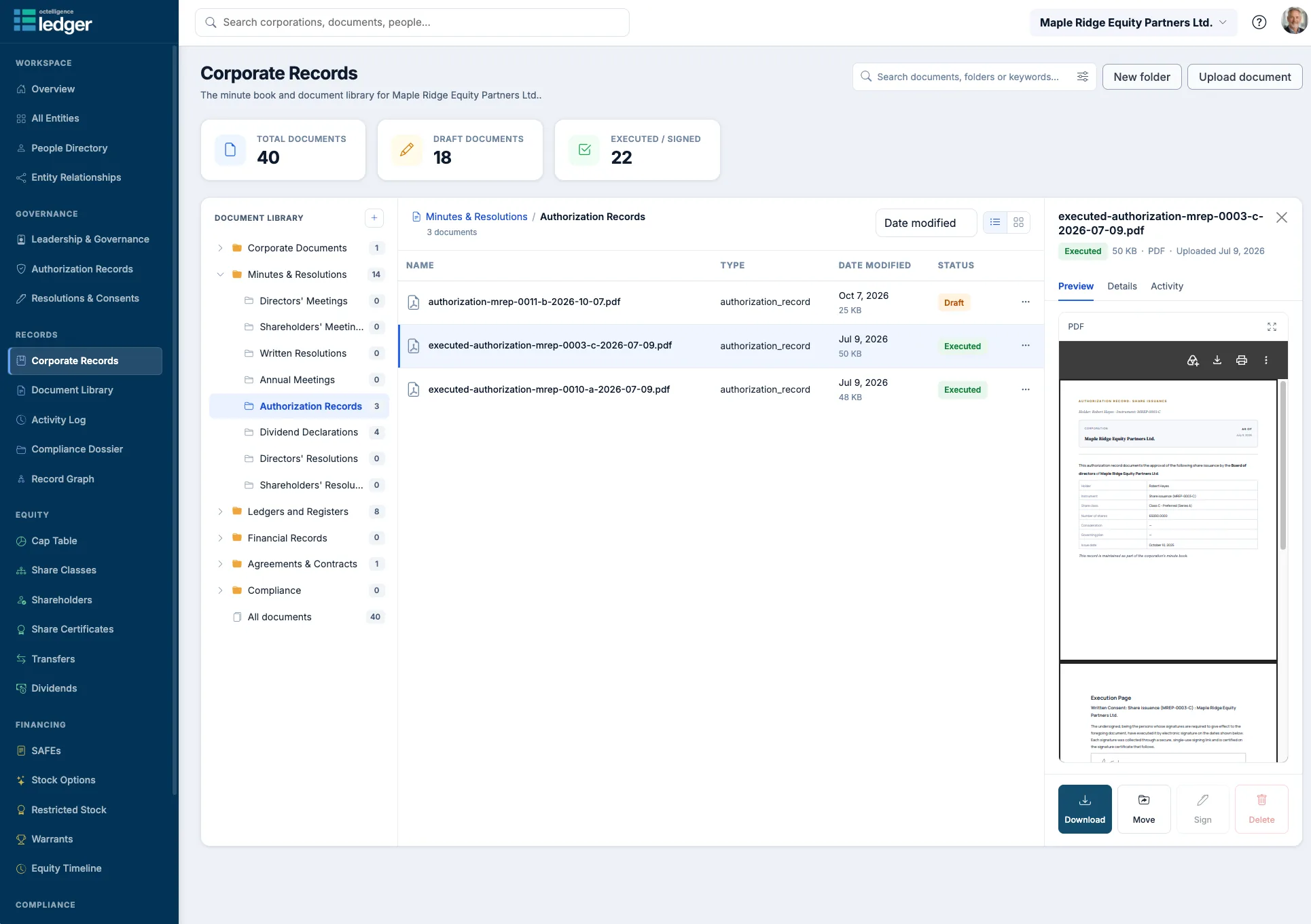
Octelligence keeps the corporate record up to date as the corporation evolves: articles, bylaws, registers, written consents, and share certificates, all in one structured place with a complete activity log.
See Digital Corporate RecordsStructured corporate records, jurisdiction-aware templates, and a complete audit trail.