Annual report requirements in Arizona (A.R.S. Title 10)
Arizona corporations file an Annual Report with the Arizona Corporation Commission (ACC) under A.R.S. § 10-1622 each year. Arizona is one of the few states where annual reports go to the Corporation Commission rather than the Secretary of State, and the fee is $45.
| A.R.S. § 10-1622 | Annual report required |
|---|---|
| Filing authority | Arizona Corporation Commission (ACC), Corporations Division |
| Form | Annual Report, filed online via eCorp |
| Deadline | On the corporation's anniversary date |
| Filing fee | $45 online |
| Late consequences | Administrative dissolution after 6 months of delinquency |
| Reinstatement | A.R.S. § 10-1422 within 6 years |
- Filed with the Arizona Corporation Commission (ACC), not the Secretary of State (Arizona is one of few states where this is the case)
- Fee $45; due on the corporation's anniversary date
- Confirms statutory agent, principal office, and directors and officers
- Approximately 6 months of delinquency triggers administrative dissolution
- Reinstatement under A.R.S. § 10-1422 within 6 years of dissolution
What A.R.S. § 10-1622 requires
Section 10-1622 of the Arizona Revised Statutes requires every Arizona corporation to file an annual report with the Arizona Corporation Commission (ACC). The report confirms the corporation's statutory agent, principal office address, directors, and officers. The current filing fee is $45, paid online through the ACC's eCorp portal.
The ACC instead of the Secretary of State
Arizona is one of a handful of US states where corporate filings are administered by a Corporation Commission rather than the Secretary of State. The ACC has constitutional status under Article 15 of the Arizona Constitution, which gives the Commission broader authority over corporate affairs than a typical Secretary of State. For counsel and accountants used to dealing with the Secretary of State in other states, the ACC's structure (commissioners, hearings, and a separate regulatory function) is a meaningful procedural difference.
Late filing and administrative dissolution
If the annual report is not filed by the anniversary date, the corporation is delinquent. Approximately six months after the due date, the ACC may administratively dissolve the corporation under A.R.S. § 10-1421. The corporation receives notice before dissolution, but the timeline is faster than several other states. Once dissolved, the corporation cannot conduct new business and contracts after dissolution may bind directors personally.
What's distinctive about Arizona
Two features make Arizona distinctive. First, the ACC's constitutional status: the Corporation Commission has independent authority and its own regulatory function, including over securities and pipelines, which gives Arizona's corporate regime a different institutional flavour. Second, Arizona's six-year reinstatement window under A.R.S. § 10-1422 is moderate, which keeps dissolved corporations recoverable but requires faster action than some neighbouring states. Arizona is increasingly chosen as a holding-company jurisdiction for tech and real-estate ventures due to its low franchise tax (none) and modest fees.
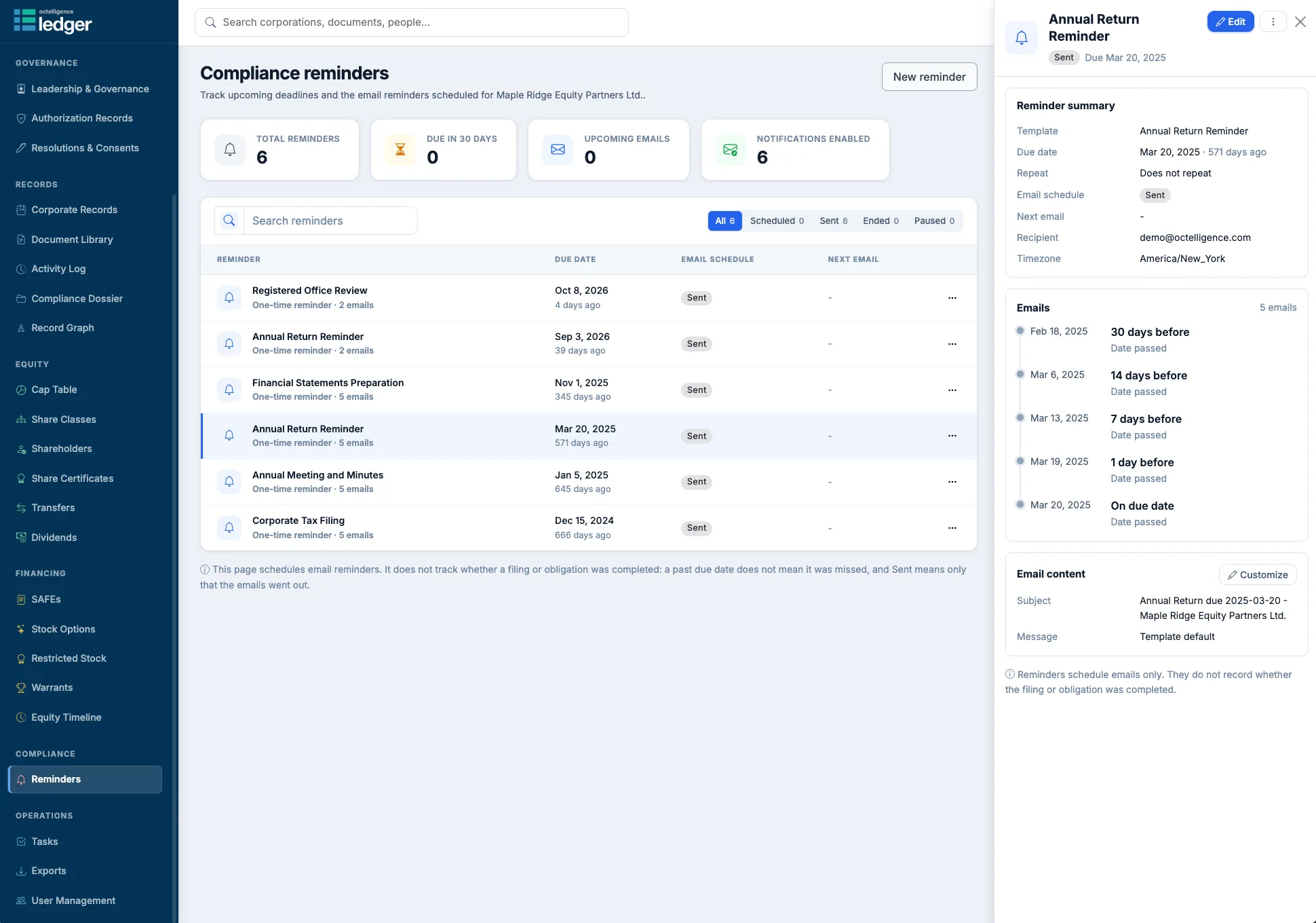
Octelligence tracks annual filing deadlines for every corporation in your portfolio, generates the required filing forms, and archives confirmations to the corporate records.
See Digital Corporate RecordsTracked deadlines, jurisdiction-specific forms, automated reminders, complete records.