Annual report requirements in South Carolina (SCBCA)
South Carolina corporations file an Annual Report (Form CL-1 attached to the corporate income tax return) with the Department of Revenue under S.C. Code § 33-16-220 by the 15th day of the third month after fiscal year end. The annual report is combined with the corporate income tax filing.
| S.C. Code § 33-16-220 | Annual report required |
|---|---|
| Filing authority | SC Department of Revenue (annual report attached to corporate income tax return) |
| Form | Form CL-1, attached to the SC Form CL-4 corporate income tax return |
| Deadline | 15th day of the 3rd month after fiscal year end (March 15 for calendar year) |
| Filing fee | Annual License Fee minimum $25 plus tax |
| Late consequences | Loss of authority to do business; potential dissolution |
| Reinstatement | By curing all defaults including back taxes |
- South Carolina's annual report is attached to the corporate income tax return (Form CL-1 with Form CL-4)
- Filed with the SC Department of Revenue, not the Secretary of State
- Annual License Fee minimum is $25; combined with corporate income tax obligations
- Due 15th day of the 3rd month after fiscal year end (March 15 for calendar-year corporations)
- Late filing affects corporate income tax compliance and good-standing status
What S.C. Code § 33-16-220 requires
Section 33-16-220 of the South Carolina Business Corporation Act requires every South Carolina corporation to file an annual report with the Department of Revenue. Unlike most US states (where the annual report goes to the Secretary of State), South Carolina attaches the annual report to the corporate income tax return: Form CL-1 (the annual report) is filed alongside Form CL-4 (the corporate income tax return) by the 15th day of the third month after fiscal year end.
The combined report-and-tax-return model
South Carolina is one of few US states that combines the annual report with the corporate income tax filing. The Annual License Fee (minimum $25) is the registry component, and the corporate income tax is the tax component. Both must be filed together. This model means South Carolina corporations cannot file the annual report independently of their tax compliance work: missing the corporate income tax return automatically also misses the annual report.
Late filing consequences
If the corporate income tax return (with attached annual report) is not filed, the corporation loses its authority to do business in South Carolina. The Department of Revenue may issue notices of intent to forfeit the corporate charter for sustained non-filing. Reinstatement requires curing all tax delinquencies (back taxes, penalties, interest) plus the annual report defaults.
What's distinctive about South Carolina
The combined corporate-income-tax-and-annual-report model is the defining feature of South Carolina compliance. For counsel and accountants, this means corporate-records work and tax-compliance work are inseparable in South Carolina, which can be a workflow advantage (single filing) or a workflow risk (tax delinquency creates corporate-records consequences). South Carolina also requires the inclusion of director and officer information in the annual report attachment, which differs from purely tax-focused filings.
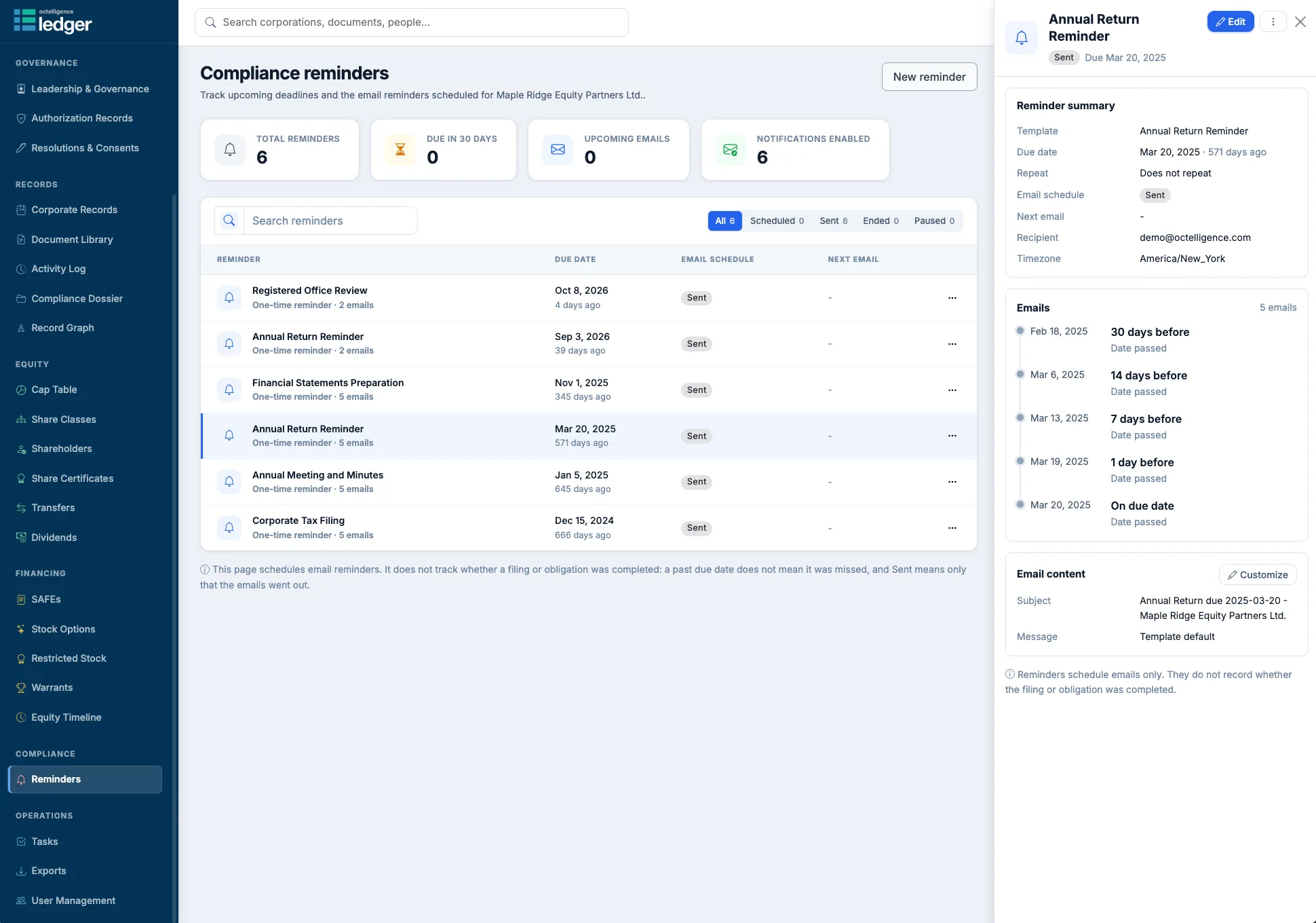
Octelligence tracks annual filing deadlines for every corporation in your portfolio, generates the required filing forms, and archives confirmations to the corporate records.
See Digital Corporate RecordsTracked deadlines, jurisdiction-specific forms, automated reminders, complete records.