Directors' resolutions under the DGCL (Delaware corporations)
How a Delaware corporation's board passes resolutions, by meeting or by unanimous written consent under DGCL § 141(f), with conflict-of-interest rules under § 144.
| § 141(f) | Unanimous written consent of directors |
|---|---|
| § 141(g) | Vacancy filling |
| § 141(i) | Meetings by telephone / electronic means |
| § 144 | Conflict of interest, interested directors |
- DGCL § 141(f) permits unanimous written consent of directors in lieu of a meeting
- Every director must sign for the consent to be effective; one absent or refusing director invalidates the mechanism
- Written consent is effective on the date of the last signature, unless otherwise specified
- Conflict-of-interest rules under § 144 require disclosure but allow interested directors to vote if procedures are followed
- Meetings can be conducted entirely by telephone or electronic means under § 141(i)
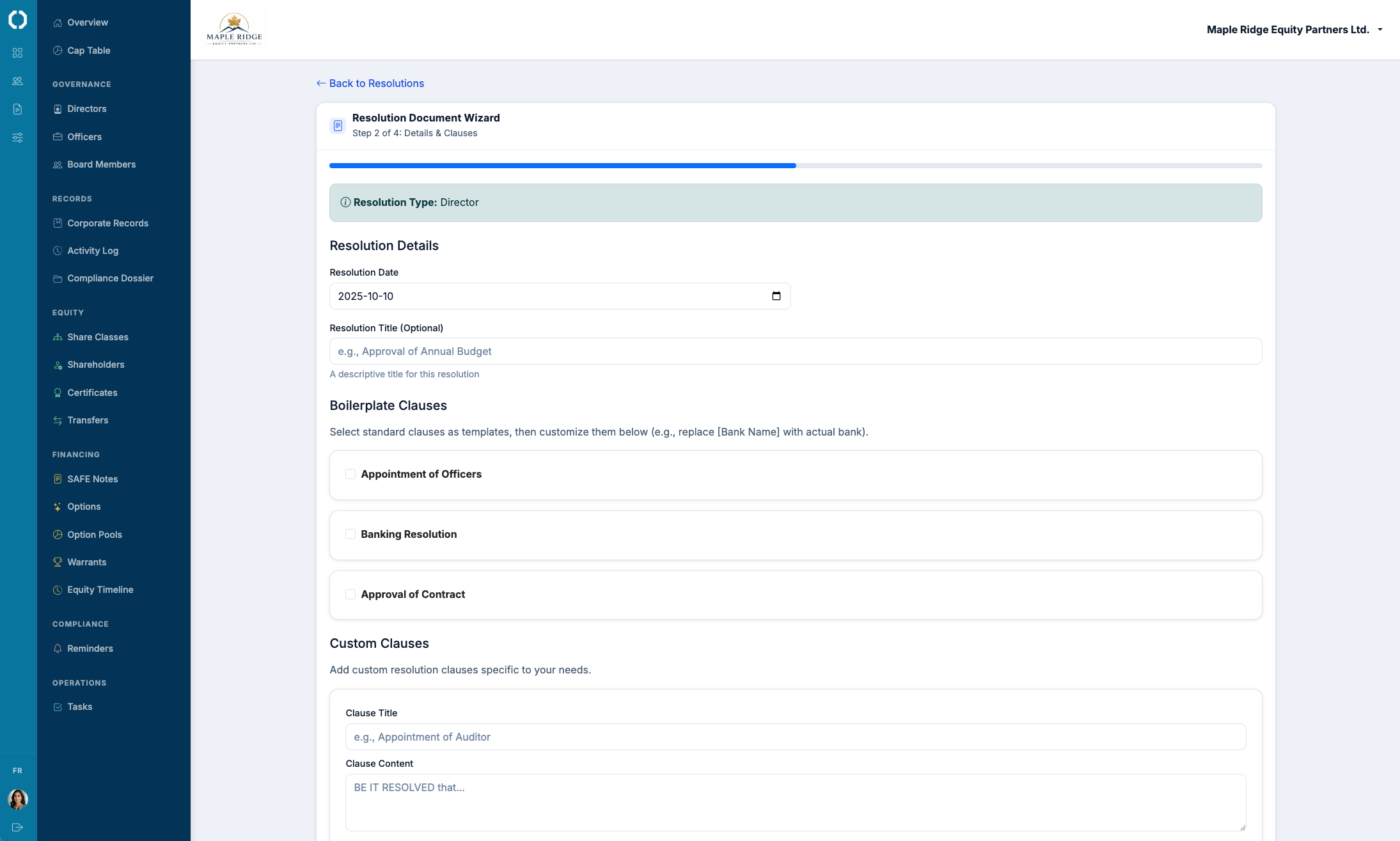
DGCL § 141(f) unanimous written consent
Delaware permits the board to act by unanimous written consent without a meeting. Every director entitled to vote on the matter must sign, just as in the Canadian statutes. This is the workhorse mechanism for Delaware startup boards: routine matters (share issuances, option grants, officer appointments) are passed by written consent rather than by calling a meeting.
Conflict-of-interest rules under § 144
Delaware's § 144 takes a different approach than the Canadian statutes. An interested director can vote on a transaction in which they have a material interest, provided one of three safe harbors applies: (a) the interest is disclosed and a majority of disinterested directors approve the transaction, (b) the interest is disclosed and the shareholders ratify, or (c) the transaction is fair to the corporation. The shareholders' ratification or independent director approval is the practical pathway. Best practice: the conflicted director discloses, then abstains from voting (even though the statute would permit them to vote).
Electronic meetings under § 141(i)
Delaware explicitly permits directors' meetings to be held entirely by telephone, video conference, or any electronic means that allows all participants to hear each other. This was clarified well before pandemic-era amendments and is now universal. The minutes of an electronic meeting are no different from those of an in-person meeting.
Octelligence captures every directors' resolution against the corporation it governs, with full signature record and unalterable timestamp. Filed automatically to the minute book.
See Digital Corporate RecordsTemplates per jurisdiction, electronic signature, complete activity log, every resolution tied to its underlying transaction.