Stock certificate requirements in South Carolina (SCBCA)
What a South Carolina corporation must know about stock certificate requirements under South Carolina Business Corporation Act of 1988, S.C. Code § 33-1-101 et seq.
| S.C. Code § 33-6-250 | Stock certificates |
|---|---|
| S.C. Code § 33-6-255 | Uncertificated shares |
| S.C. Code § 33-6-260 | Transfer restrictions |
| S.C. Code § 33-6-265 | Lost certificates |
- Must show corporation name, holder name, number and class of shares, and signing officers
- Signed by authorized officers (typically president and secretary); facsimile signatures permitted
- Restrictive notations required when shares are subject to transfer restrictions
- Uncertificated shares permitted under the MBCA framework; widely used in modern startups
- Transfer requires endorsement and surrender of the old certificate (or registry entry for uncertificated shares)
What the SCBCA requires
South Carolina Code § 33-6-250 prescribes stock certificate content. SC follows the MBCA framework.
- Corporation name (in full)
- Statement that the corporation is incorporated under the applicable state law
- Name of the person to whom the certificate is issued
- Number and class or series of shares
- Signatures of authorized officers
Restrictive notations
When shares are subject to transfer restrictions, the certificate must bear a restrictive notation. Without it, the restriction may be unenforceable against a good-faith purchaser without notice.
Uncertificated shares
Most MBCA-tradition states permit corporations to issue shares without physical certificates. In that case, the stock ledger is the proof of ownership.
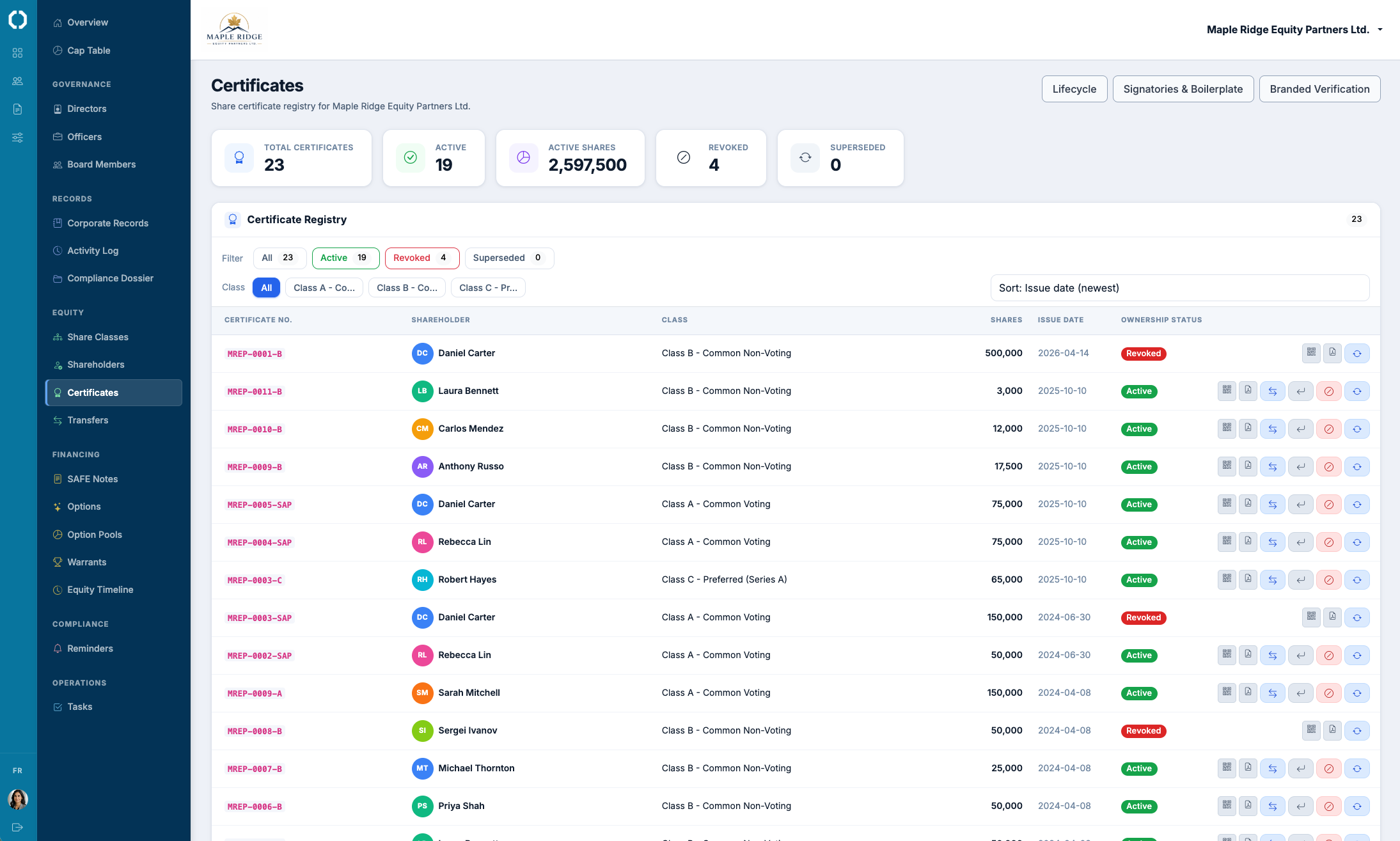
Octelligence issues stock certificates that comply with the applicable state corporation code. Each certificate carries a QR-verifiable hash and is linked to the issuance in the stock ledger.
See Digital Corporate RecordsStatutory-compliant content, QR verification, full transfer audit trail.