Annual Statement of Information for a California corporation
California stock corporations file a Statement of Information (Form SI-550) with the Secretary of State under Cal. Corp. Code § 1502, biennially (every two years). The fee is $25, and the filing is separate from the $800 minimum annual franchise tax owed to the Franchise Tax Board.
| Cal. Corp. Code § 1502 | Statement of Information required |
|---|---|
| Filing authority | California Secretary of State, Business Programs |
| Form | SI-550 Statement of Information (biennial for stock corporations) |
| Deadline | Within 90 days of incorporation, then every 2 years in anniversary month |
| Filing fee | $25 |
| Late consequences | $250 penalty + suspension by the Franchise Tax Board |
| Revival | By filing all delinquent statements and paying penalties |
- Filed with the California Secretary of State; the corporation's separate $800 minimum franchise tax goes to the Franchise Tax Board
- Fee $25; biennial filing (every 2 years) for stock corporations under Cal. Corp. Code § 1502
- Confirms agent for service, principal office, directors, CEO, secretary, and CFO
- Late filing triggers a $250 penalty; sustained non-filing leads to FTB suspension
- Suspended corporations can be revived by curing all defaults, including FTB tax obligations
What Cal. Corp. Code § 1502 requires
Section 1502 of the California Corporations Code requires every domestic stock corporation to file a Statement of Information (Form SI-550) with the Secretary of State biennially, in the corporation's anniversary month. The first statement is due within 90 days of incorporation. The statement confirms the agent for service of process, the principal executive office, the principal California office (if different), and the names and addresses of the CEO, secretary, CFO, and directors.
Two filings, two agencies, one corporation
California is unusual in splitting corporate compliance across two agencies. The Statement of Information goes to the Secretary of State at $25, biennially. Separately, the corporation owes a minimum annual franchise tax of $800 to the Franchise Tax Board (FTB), due regardless of revenue, even in the first year. Many founders mistake the Statement of Information for the corporation's full annual compliance, then receive an FTB delinquency notice. Both filings must be tracked.
Late filing and FTB suspension
If the Statement of Information is not filed on time, the Secretary of State imposes a $250 penalty. Sustained non-filing, combined with FTB tax delinquency, leads to suspension by the FTB under Rev. & Tax. Code § 23301. A suspended California corporation cannot defend or prosecute lawsuits, enforce contracts, or take corporate actions, which can be catastrophic for ongoing operations. Revival requires curing both the Secretary of State defaults and the FTB tax obligations.
What's distinctive about California
California's $800 minimum franchise tax is the highest in the US and applies regardless of revenue, profit, or operations. This makes California the most expensive US jurisdiction for ongoing corporate maintenance, particularly for inactive holdcos. The biennial Statement of Information (rather than annual) is a small saving, but the Secretary of State filing is procedurally distinct from any tax obligation. For counsel managing California corporations alongside Delaware or other states, the biennial cadence requires its own calendar entry, and the FTB obligations need to be tracked separately by tax counsel or the corporation's accountant.
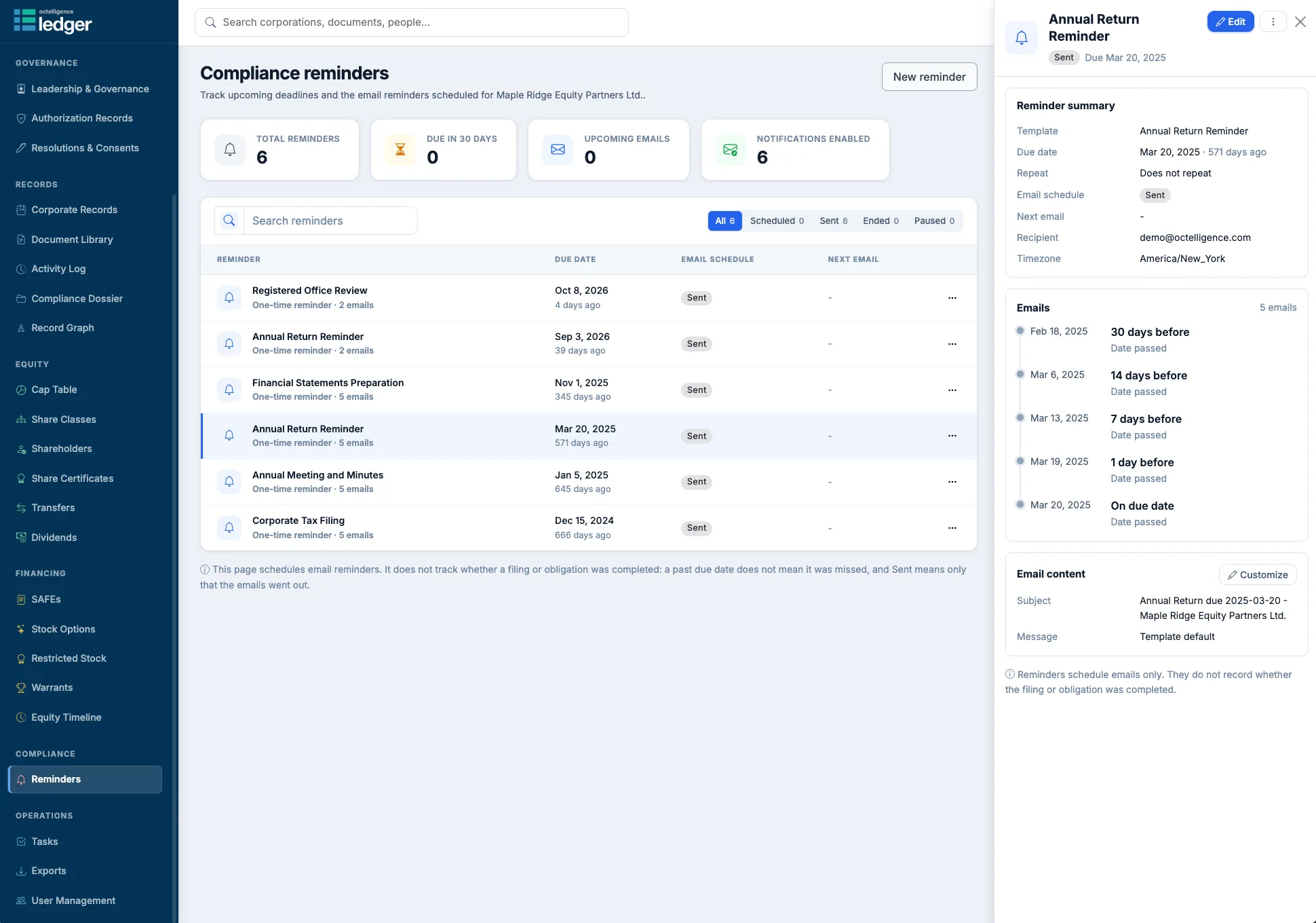
Octelligence tracks the annual return deadline alongside every other corporate obligation, prompts ahead of the due date, and stores the filed return in the minute book so the corporate registry record matches the internal record.
See Digital Corporate RecordsFilings calendar, jurisdiction-aware deadlines, and a record of every return filed in the corporate records.