Minute book requirements in South Carolina (SCBCA)
South Carolina corporations maintain corporate records under S.C. Code § 33-16-101. The South Carolina Business Corporation Act is MBCA-based with standard records and inspection provisions, but the annual filing is uniquely combined with the corporate income tax return.
| S.C. Code § 33-16-101 | Required corporate records |
|---|---|
| S.C. Code § 33-16-102 | Inspection rights |
| S.C. Code § 33-16-104 | Court-ordered inspection |
| Records location | Principal office of the corporation |
| Inspection rights | Shareholders with proper purpose; 5 business days notice |
| Annual filing | Combined with corporate income tax return (CL-1 + CL-4) |
- Records under § 33-16-101: articles, bylaws, minutes, resolutions, share register, accounting records
- South Carolina follows the MBCA framework for corporate records
- Shareholders have proper-purpose inspection rights under § 33-16-102
- Annual report (Form CL-1) is filed alongside corporate income tax return (Form CL-4)
- Filed with the SC Department of Revenue, not the Secretary of State
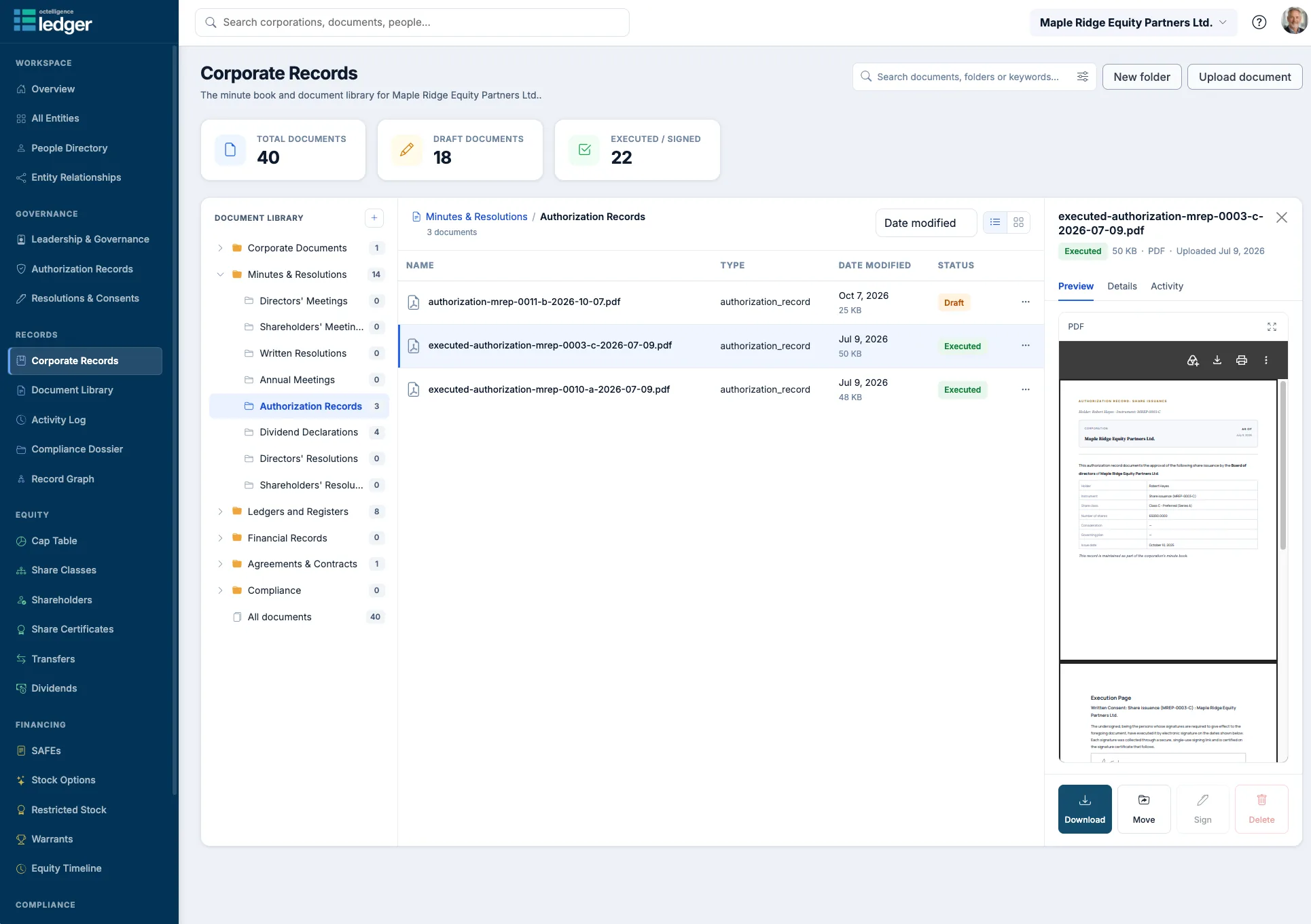
What S.C. Code § 33-16-101 requires
Section 33-16-101 of the South Carolina Business Corporation Act requires every SC corporation to maintain articles and bylaws, minutes of meetings and resolutions, the share register, and accounting records. Records are kept at the principal office. SC adopted the MBCA, so the framework follows MBCA Chapter 16 closely.
Inspection rights under § 33-16-102
The standard MBCA two-tier inspection structure applies: articles, bylaws, and minutes of shareholder meetings are inspectable without restriction; share register, board minutes, and accounting records require a proper-purpose showing with 5 business days' notice.
The combined report-and-tax-return model
South Carolina is one of few US states that combines the annual report with the corporate income tax return: Form CL-1 (annual report) is filed alongside Form CL-4 (corporate income tax) with the Department of Revenue, not the Secretary of State. For corporate-records purposes, this means corporate-registry compliance and tax compliance are inseparable in SC.
What's distinctive about South Carolina
The combined corporate-and-tax filing is the defining operational feature of SC. The substantive corporate-records framework under § 33-16-101 is standard MBCA. The combination means SC corporate counsel often coordinate closely with tax counsel and accountants, and corporate compliance failures are often tax compliance failures. SC's annual License Fee minimum is $25, plus the corporate income tax (which has a $25 minimum), making total minimum annual cost around $50.
Octelligence keeps the corporate record up to date as the corporation evolves: articles, bylaws, registers, written consents, and share certificates, all in one structured place with a complete activity log.
See Digital Corporate RecordsStructured corporate records, jurisdiction-aware templates, and a complete audit trail.