Annual meeting requirements in Arizona (A.R.S. Title 10)
Arizona corporations must hold an annual shareholders' meeting under A.R.S. § 10-701 within 13 months of the previous meeting. The meeting can be replaced by written consent under A.R.S. § 10-704, but Arizona requires unanimous consent (not majority).
| A.R.S. § 10-701 | Annual meeting required |
|---|---|
| A.R.S. § 10-704 | Action without meeting (unanimous written consent) |
| A.R.S. § 10-705 | Notice of meeting |
| A.R.S. § 10-722 | Voting |
| Deadline | Within 13 months of previous meeting |
| Written consent | Unanimous required (no majority-consent option) |
- Annual meeting under A.R.S. § 10-701 within 13 months of previous (default; subject to bylaws)
- Written consent under A.R.S. § 10-704 requires UNANIMOUS consent of voting shareholders
- No majority-consent option in Arizona (unlike Delaware, California, Texas)
- Notice 10-60 days before the meeting under § 10-705
- Court-ordered meeting available if corporation fails to hold one
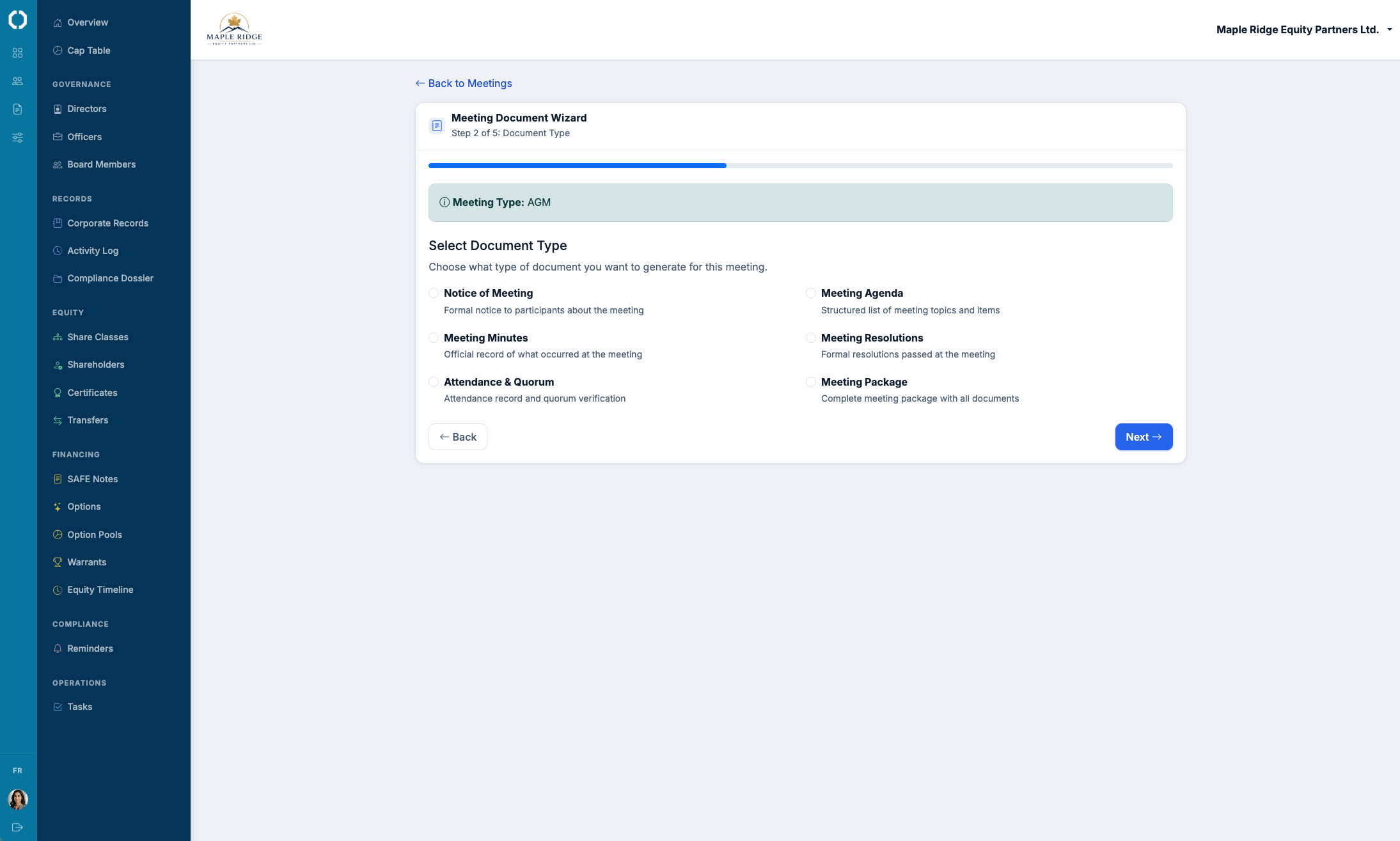
A.R.S. § 10-701 requirements
Section 10-701 of the Arizona Revised Statutes requires every Arizona corporation to hold an annual shareholders' meeting within 13 months of the previous annual meeting (subject to bylaw provisions extending or modifying this). The meeting addresses standard MBCA matters: election of directors and any other proper business.
Unanimous written consent under § 10-704
Section 10-704 permits action without a meeting only by unanimous written consent of all shareholders entitled to vote. Arizona has NOT adopted the majority-consent option that Delaware (§ 228) and several other states permit. This makes Arizona's annual-meeting framework slightly more rigid for closely-held corporations: a single dissenting voting shareholder can force an actual meeting rather than a written consent.
Court-ordered meeting
If the corporation fails to hold an annual meeting and shareholders cannot use the unanimous-consent route, A.R.S. § 10-703 permits shareholders to apply to the Arizona superior court for an order requiring the meeting to be held. This is a backstop mechanism for closely-held corporations where the annual cycle has lapsed and shareholders cannot agree on a written-consent path.
What's distinctive about Arizona
The unanimous-consent requirement under § 10-704 is Arizona's distinctive feature. For closely-held Arizona corporations with stable shareholder bases, the difference between unanimous and majority consent is largely academic (everyone signs anyway). For corporations with minority shareholders who decline to sign written consents, Arizona forces a real meeting, which can be procedurally inconvenient. The Arizona Corporation Commission (rather than the Secretary of State) does not directly enforce the annual-meeting requirement, but corporate-records audits and shareholder litigation can surface non-compliance.
Octelligence generates the annual unanimous written consent or meeting minutes for every corporation, with director election and other ordinary business pre-formatted.
See Digital Corporate RecordsTracked deadlines, jurisdiction-specific templates, electronic written consents, and a complete records.