Annual meeting requirements in Pennsylvania (PBCL)
Pennsylvania corporations must hold an annual shareholders' meeting under 15 Pa. C.S. § 1755 at a time fixed by the bylaws. The meeting can be replaced by majority written consent under § 1766.
| 15 Pa. C.S. § 1755 | Annual meeting required |
|---|---|
| 15 Pa. C.S. § 1766 | Partial written consent (unique PA feature) |
| 15 Pa. C.S. § 1704 | Notice of meeting |
| 15 Pa. C.S. § 1757 | Voting |
| Deadline | Each year as fixed by bylaws |
| Written consent | Permits partial consent with notice to non-consenting shareholders |
- Annual meeting under 15 Pa. C.S. § 1755 at time fixed by bylaws
- Pennsylvania permits PARTIAL written consent under § 1766 (unique feature)
- Notice required to non-consenting shareholders after partial consent
- Notice 5-60 days before the meeting under § 1704
- Court-ordered meeting available if annual cycle lapses
15 Pa. C.S. § 1755 requirements
Section 1755 of the Pennsylvania Business Corporation Law requires every Pennsylvania corporation to hold an annual shareholders' meeting at a time fixed by the bylaws. The meeting elects directors and addresses other proper business.
Partial written consent under § 1766
Pennsylvania has a distinctive partial-consent provision under 15 Pa. C.S. § 1766. Action may be taken by written consent of the minimum shareholders required to authorize the action at a meeting (typically majority), with prompt notice to all non-consenting shareholders. This is similar to Delaware's § 228 but with the explicit notice-to-non-consenting requirement that Minnesota also has.
Recent annual filing transition
Pennsylvania's broader 2024-2025 transition from decennial to annual public-record filings (under 15 Pa. C.S. § 146) is separate from the annual-meeting requirement but adds a new annual obligation for Pennsylvania corporations. For corporate-records purposes, the annual meeting under § 1755 and the new annual public-record filing under § 146 are independent calendar items.
What's distinctive about Pennsylvania
Pennsylvania's partial-consent regime under § 1766 (with notice to non-consenting shareholders) sits between unanimous-consent states (Illinois, Arizona) and pure majority-consent states (Delaware, Colorado). The notice requirement gives minority shareholders information they wouldn't have in pure majority states. Combined with the 2025 transition to annual public-record filings, Pennsylvania's overall annual-cycle framework is undergoing significant evolution. The $7 annual filing fee is now the lowest in the US.
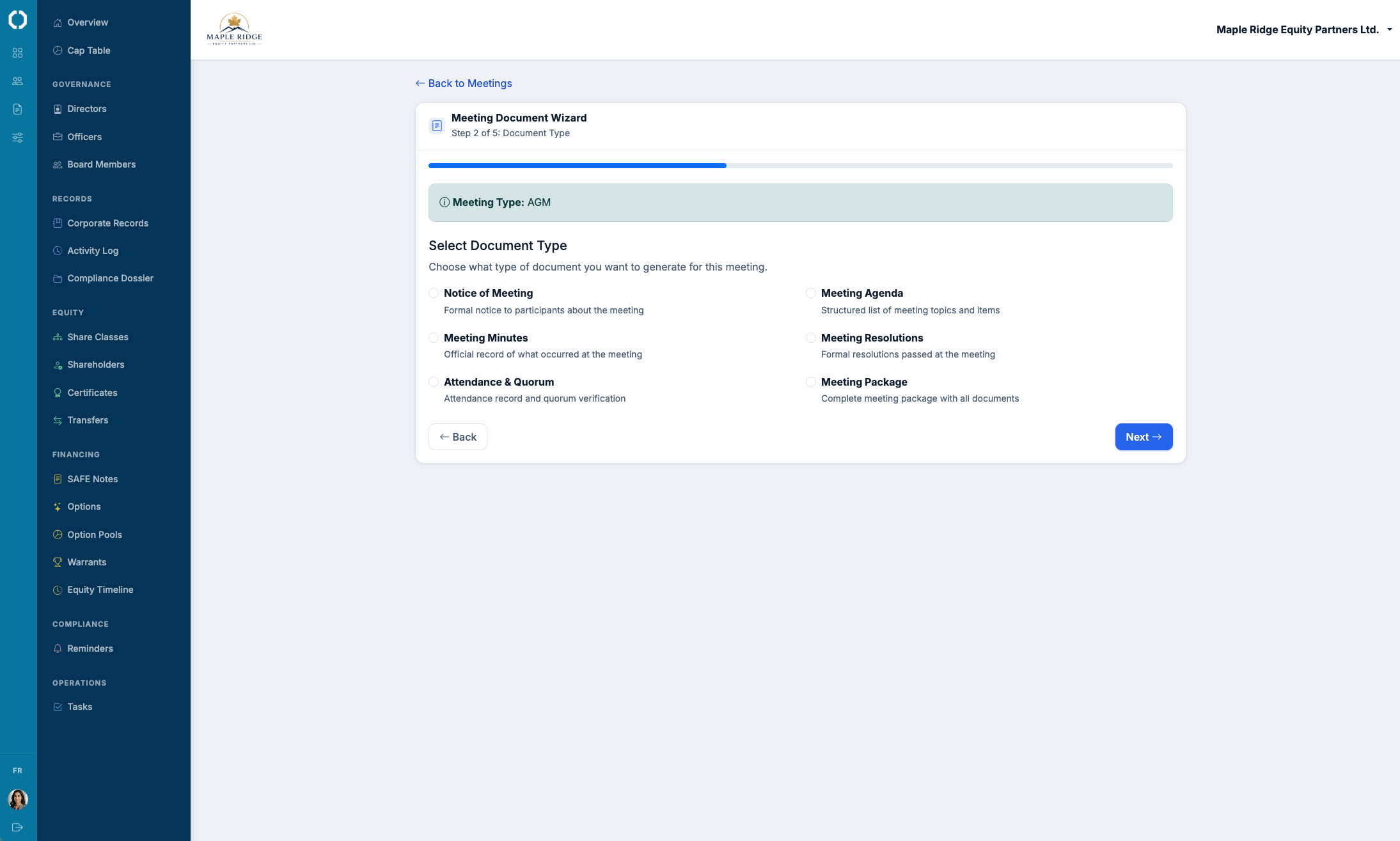
Octelligence generates the annual unanimous written consent or meeting minutes for every corporation, with director election and other ordinary business pre-formatted.
See Digital Corporate RecordsTracked deadlines, jurisdiction-specific templates, electronic written consents, and a complete records.