Stock certificate requirements in Pennsylvania (PBCL)
What a Pennsylvania corporation must know about stock certificate requirements under Pennsylvania Business Corporation Law, 15 Pa. C.S. § 1101 et seq.: statute citations, mechanics, and inspection rights.
| 15 Pa. C.S. § 1528 | Share certificates |
|---|---|
| 15 Pa. C.S. § 1528(b) | Uncertificated shares |
| 15 Pa. C.S. § 1529 | Transfer restrictions |
| 15 Pa. C.S. § 1530 | Lost certificates |
- Must show corporation name, holder name, number and class of shares, and signing officers
- Signed by authorized officers (typically president and secretary); facsimile signatures permitted
- Restrictive notations required when shares are subject to transfer restrictions
- Uncertificated shares permitted under the MBCA framework; widely used in modern startups
- Transfer requires endorsement and surrender of the old certificate (or registry entry for uncertificated shares)
What the PBCL requires
15 Pa. C.S. § 1528 prescribes stock certificate content. Pennsylvania's PBCL has distinctive heritage but supports both physical and uncertificated shares.
Pennsylvania-specific considerations
Pennsylvania's PBCL has pre-MBCA heritage, with distinctive procedural language and some structural choices that differ from the Model Business Corporation Act framework. Pennsylvania counsel should review specific resolution drafts, certificate forms, and inspection demands to ensure compliance with Pennsylvania-specific rules.
Practical implications
For day-to-day corporate records management in Pennsylvania, the practical implications are mostly procedural: the corporation's bylaws and PBCL both apply. The general principles (records must be maintained, shareholders have inspection rights, annual filings are required where applicable) remain similar to other US jurisdictions, but the exact procedural details merit specific Pennsylvania counsel review.
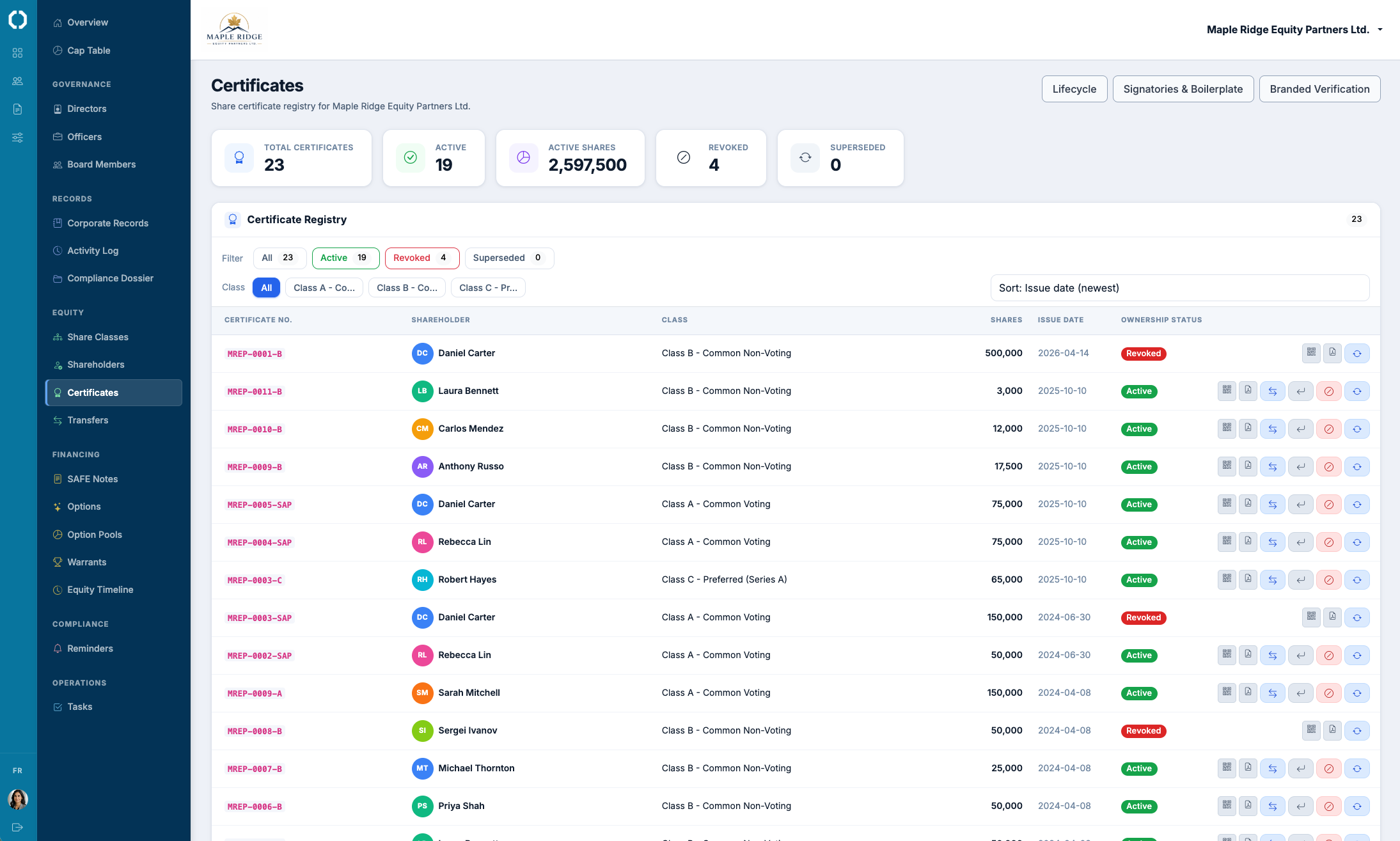
Octelligence issues stock certificates that comply with the applicable state corporation code. Each certificate carries a QR-verifiable hash and is linked to the issuance in the stock ledger, with full history of cancellations and reissues.
See Digital Corporate RecordsStatutory-compliant content, QR verification, full transfer audit trail.