How to issue shares in Arizona corporations
Arizona is a Model Business Corporation Act state. The Arizona Business Corporation Act under ARS Title 10 closely follows the MBCA template with Arizona-specific variations on annual filing and state securities-law administration through the Arizona Corporation Commission.
| A.R.S. § 10-621 | Issuance of shares |
|---|---|
| A.R.S. § 10-622 | Form of consideration |
| A.R.S. § 10-625 | Form and content of certificates |
| A.R.S. § 10-1601 | Corporate records |
| A.R.S. § 10-1602 | Inspection of records |
| A.R.S. § 44-1841 | Arizona Securities Act exemptions |
- Authorized by the board under A.R.S. § 10-621
- Future services and promissory notes permitted as consideration (§ 10-622)
- Uncertificated shares permitted under § 10-626
- Inspection rights under § 10-1602 with proper-purpose standard and 5-business-day notice
- Arizona Securities Act compliance under A.R.S. § 44-1841 et seq.
Board authorization under A.R.S. § 10-621
Stock issuance is authorized by the board under Arizona Revised Statutes § 10-621. The board determines the consideration under § 10-622. Arizona follows the MBCA permissive pattern: tangible and intangible property, services rendered, contracts for services to be performed, promissory notes, and other benefits to the corporation.
Consideration: full MBCA breadth
Arizona permits the broadest consideration framework typical of MBCA states. Future services count, promissory notes count, and the board's determination of value is conclusive absent fraud. Founder grants relying on future services need a recital documenting the services and their value.
Uncertificated shares under § 10-626
A.R.S. § 10-626 permits the corporation to issue uncertificated shares by board resolution. Modern Arizona-incorporated corporations typically elect uncertificated.
Corporate records and inspection
A.R.S. § 10-1601 requires the standard MBCA records: articles, bylaws, minutes, consents, shareholder list. § 10-1602 grants inspection rights on 5-business-day written notice describing purpose with reasonable particularity. Arizona courts have construed the proper-purpose requirement consistently with other MBCA states.
Arizona Corporation Commission and securities law
Annual filings go to the Arizona Corporation Commission rather than a Secretary of State (Arizona is one of a small number of states with an elected commission handling corporate matters). The Arizona Securities Act (A.R.S. § 44-1841 et seq.) governs securities offerings to Arizona residents; the Arizona Corporation Commission Securities Division administers the Act. NSMIA pre-empts the Arizona Securities Act for Rule 506 offerings but not the notice filing.
Common mistakes
Common Arizona-specific failure points in share issuance:
- Treating filings as if they go to a Secretary of State (Arizona uses the Corporation Commission)
- Missing Arizona Securities Act notice filings for offerings to AZ residents
- Not maintaining the § 10-1601 corporate records inventory
- Treating Arizona case law as identical to Delaware on fiduciary duties
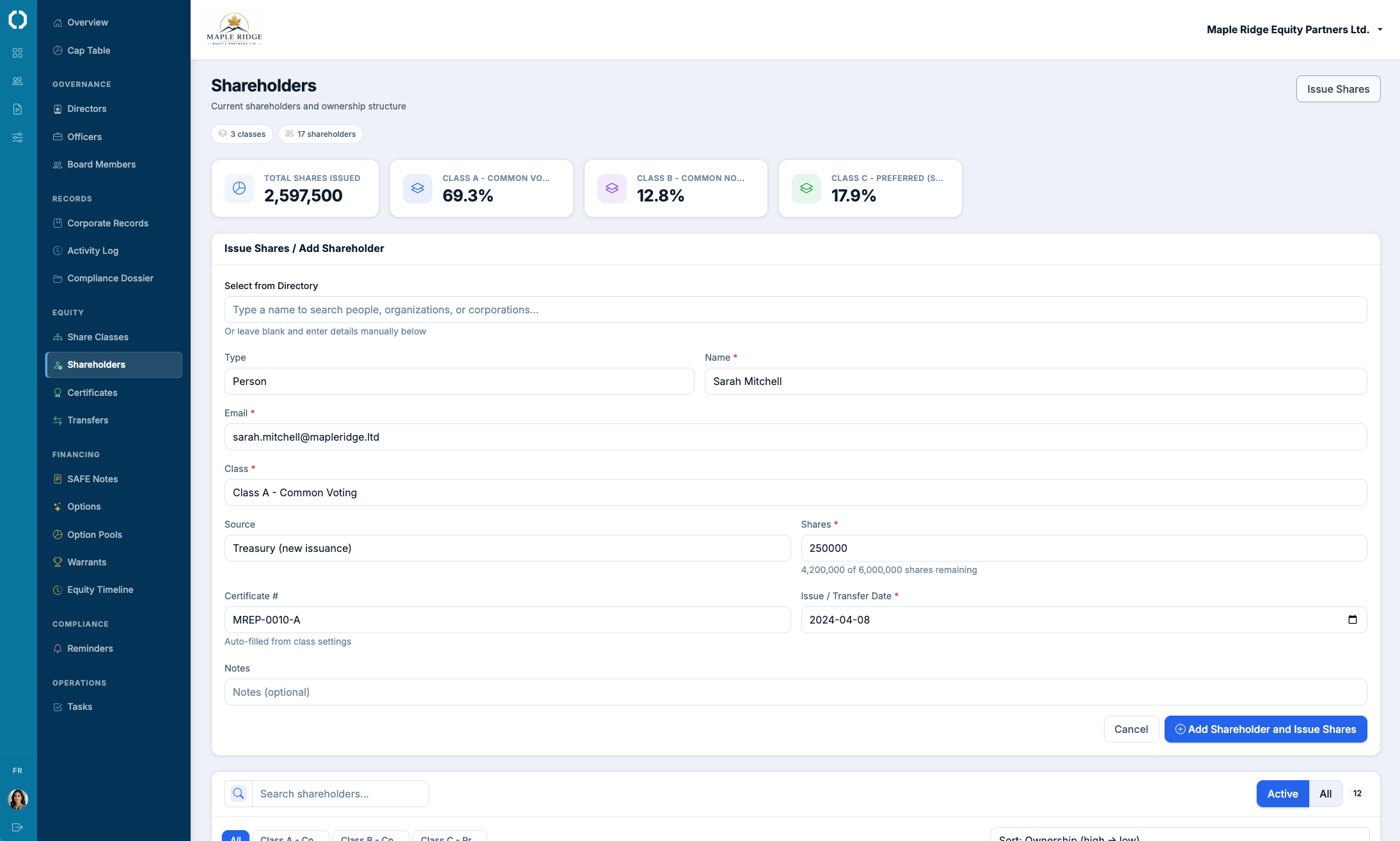
Octelligence handles ARS Title 10 specifics in the share register, certificates, board resolutions, and beneficial-ownership filings: jurisdiction-aware templates, statute citations on each record, and the right reconciliation cadence for the corporation.
See Digital Corporate RecordsCommon questions in Arizona
Octelligence handles ARS Title 10-specific share issuance: register, certificates, resolutions, and beneficial-ownership records aligned with statute.