How to issue shares in Nevada corporations
Nevada is a popular state of incorporation for asset-protection-oriented and privacy-oriented corporations, with statutes that are favourable to management and limit shareholder inspection rights. NRS Chapter 78 governs Nevada corporations.
| NRS § 78.195 | Issuance of shares |
|---|---|
| NRS § 78.211 | Consideration for shares |
| NRS § 78.215 | Forms of consideration |
| NRS § 78.235 | Stock certificates; uncertificated shares |
| NRS § 78.105 | Stock ledger; shareholder list; inspection |
| NRS § 90.530 | Nevada Uniform Securities Act exemptions |
- Authorized by the board under NRS § 78.195; consideration determined under §§ 78.211 and 78.215
- Future services permitted as consideration (§ 78.215)
- Uncertificated shares permitted under § 78.235
- Inspection rights under § 78.105 distinctively require 15% ownership (one of the highest US thresholds)
- Nevada Uniform Securities Act under NRS Chapter 90 for state filings
Board authorization under NRS § 78.195
Stock issuance is authorized by the board under NRS § 78.195. The board determines consideration under §§ 78.211 and 78.215. Nevada permits broad consideration including services and contracts for services to be performed. The board's determination of consideration adequacy is conclusive absent fraud, and Nevada courts give substantial deference to board determinations (Nevada is one of the more management-protective state regimes).
Consideration under § 78.215
NRS § 78.215 permits consideration in the form of money, services performed, contracts for services to be performed, securities or debts of the corporation, or any other benefit to the corporation. Future services are permitted. Promissory notes are permitted as consideration. The flexibility is similar to Florida and Texas, more permissive than Delaware or New York.
Uncertificated shares under § 78.235
NRS § 78.235 permits the corporation to issue certificated or uncertificated shares. Election is by board resolution. Modern Nevada-incorporated corporations typically elect uncertificated. The corporation may use a transfer agent or maintain the stock ledger internally.
Inspection rights under NRS § 78.105 (the 15% threshold)
Nevada's inspection regime is distinctive. NRS § 78.105 grants inspection rights to shareholders holding at least 15% of the outstanding shares (one of the highest thresholds in the US, much higher than DGCL § 220's no-threshold proper-purpose standard or California's 5% under § 1601(a)). The 15% threshold significantly limits minority-shareholder inspection rights and is one reason Nevada is chosen for governance-protective purposes.
Nevada Uniform Securities Act compliance
Offerings to Nevada residents are governed by NRS Chapter 90 (Nevada Uniform Securities Act). § 90.530 lists exemptions including the limited offering exemption and accredited investor variants. NSMIA pre-empts Chapter 90 for Rule 506 offerings but not the notice filing. The Nevada Secretary of State administers Chapter 90.
Common mistakes
Common Nevada-specific failure points in share issuance:
- Treating Delaware case law as controlling on Nevada-specific provisions (15% inspection threshold has no Delaware parallel)
- Inspection demand from a sub-15% shareholder being denied without clear documentation
- Failing to maintain the NRS § 78.105 stock ledger and shareholder list
- Missing the NRS Ch. 90 notice filing for offerings to Nevada residents
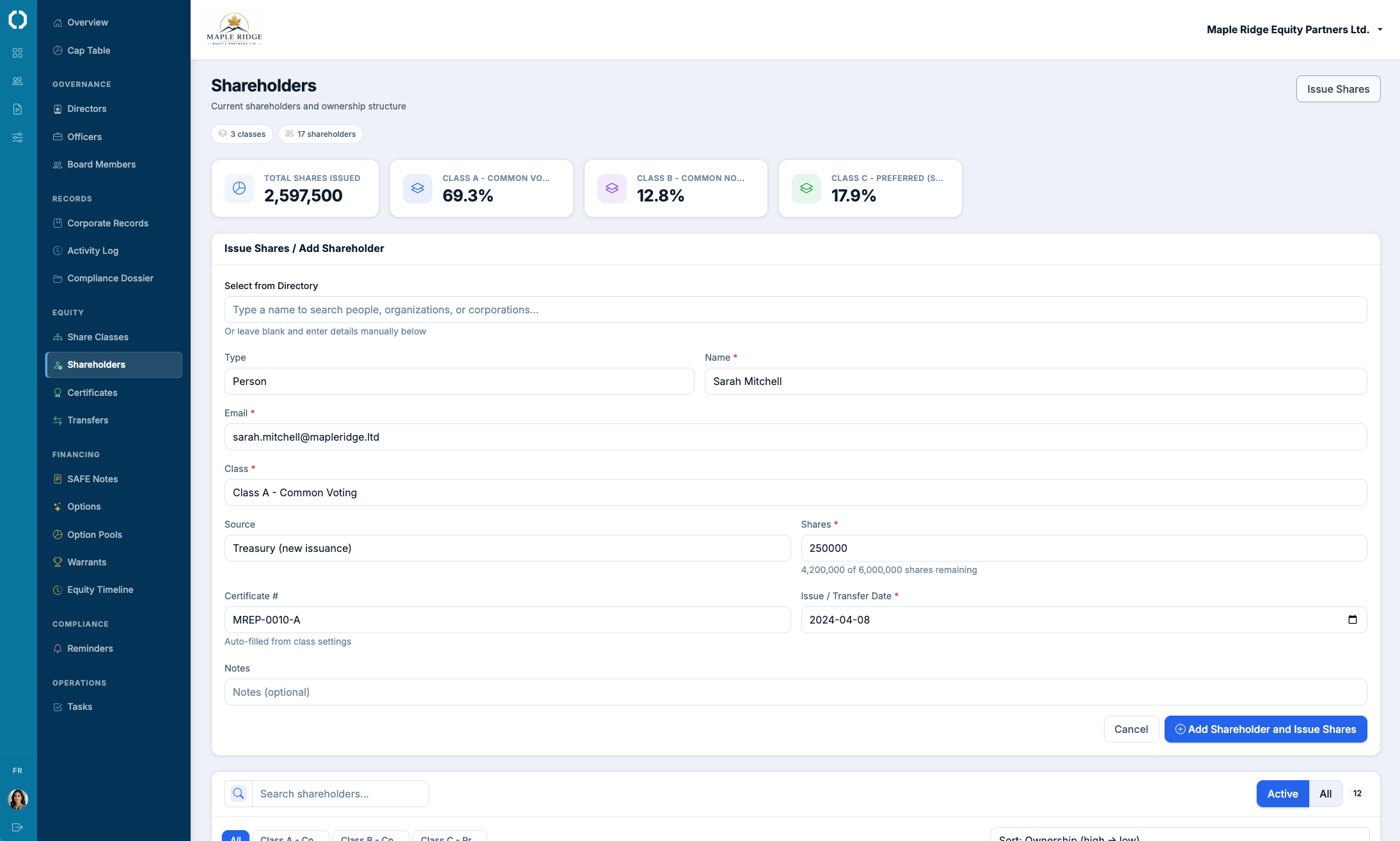
Octelligence handles NRS Ch. 78 specifics in the share register, certificates, board resolutions, and beneficial-ownership filings: jurisdiction-aware templates, statute citations on each record, and the right reconciliation cadence for the corporation.
See Digital Corporate RecordsCommon questions in Nevada
Octelligence handles NRS Ch. 78-specific share issuance: register, certificates, resolutions, and beneficial-ownership records aligned with statute.