How to issue shares in Delaware corporations
Delaware is the most common state of incorporation for US corporations. The DGCL gives boards broad authority to set the consideration for stock, requires the stock ledger as the controlling record of ownership, and lets corporations elect to be certificated or uncertificated.
| DGCL § 152 | Consideration for stock; payment |
|---|---|
| DGCL § 153 | Par value; capital |
| DGCL § 157 | Rights and options respecting stock |
| DGCL § 158 | Stock certificates; uncertificated stock |
| DGCL § 161 | Issuance of additional stock |
| DGCL § 219 | Stock ledger as record of stockholders |
- Authorized by the board under DGCL § 152, which lets the board determine consideration
- No par value required, but if set, consideration cannot be below par
- Stock ledger required under § 219 as the controlling record of stockholders
- Uncertificated stock permitted under § 158; certificates optional
- Federal Securities Act exemption (typically Rule 506(b)) and a Form D filing required
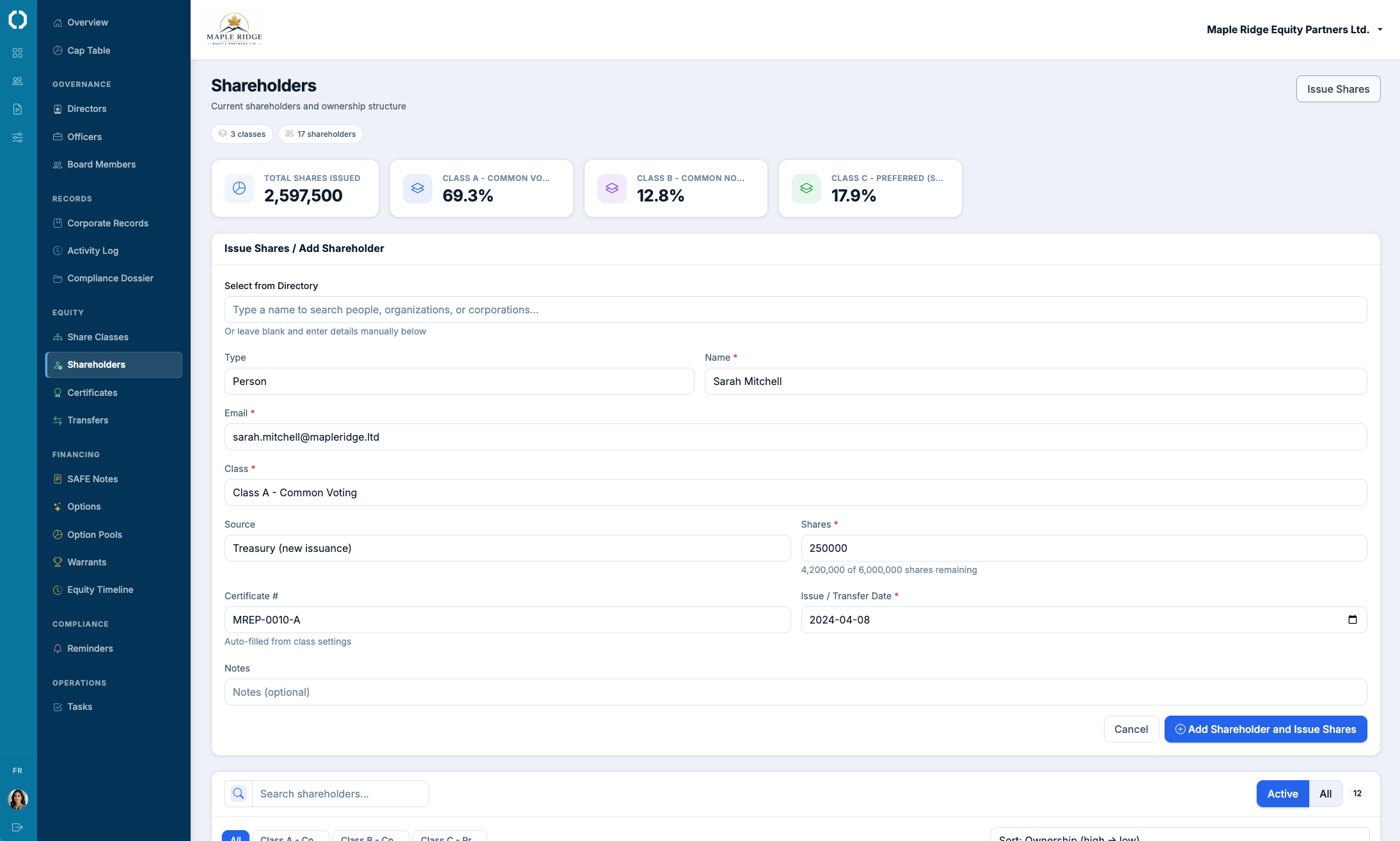
Board authorization under DGCL § 152
Stock issuance is authorized by the board of directors under DGCL § 152. The board determines the consideration to be received and, where the stock has par value, ensures the consideration equals at least the par value. The board's determination of consideration sufficiency is conclusive absent fraud. A board resolution at a meeting or by unanimous written consent under § 141(f) records the issuance: subscriber, class and number of shares, consideration, conditions, and effective date.
Consideration: cash, property, services, debt conversion
Consideration may be cash, property, services rendered, the conversion of an existing instrument (SAFE, convertible note, option exercise), or any combination. Services to be performed in the future are not permitted consideration in Delaware (this differs from some other states). For non-cash consideration, the board's resolution must identify the fair value and the basis for that valuation.
The stock ledger under § 219
DGCL § 219 requires every Delaware corporation to maintain a stock ledger that lists the current stockholders, their addresses, and the shares held. The stock ledger is the controlling record of stockholders for voting, dividend, and inspection purposes. § 220 grants stockholders an inspection right on proper purpose. The stock ledger may be electronic; the corporation may use a transfer agent to maintain it.
Certificate or uncertificated
DGCL § 158 permits the corporation to elect, by resolution of the board, that some or all classes or series of its stock be uncertificated. If certificates are issued, they must be signed by authorized officers, contain the corporation's name, the holder's name, the class, the number of shares, and any restrictions on transfer. Most modern Delaware C-Corps use uncertificated stock with statements of holdings.
Federal and state securities-law compliance
Every share issuance must qualify for a Securities Act exemption: Rule 506(b) (no general solicitation, up to 35 non-accredited investors with information), Rule 506(c) (general solicitation but all investors verified accredited), Section 4(a)(2), Regulation A, or Section 3(a)(11) intrastate. Form D is filed with the SEC within 15 days of the first sale. State blue-sky filings apply except where pre-empted by NSMIA.
Common mistakes
Common Delaware-specific failure points in share issuance:
- Issuing stock for future services (not permitted under DGCL § 152; common founder-grant defect)
- Issuing stock at a price below par when par value is set (creates a § 162 liability for the unpaid difference)
- Failing to file Form D within 15 days of the first sale when relying on Regulation D
- Treating the cap table as the source of truth instead of the stock ledger required under § 219
Octelligence handles DGCL specifics in the share register, certificates, board resolutions, and beneficial-ownership filings: jurisdiction-aware templates, statute citations on each record, and the right reconciliation cadence for the corporation.
See Digital Corporate RecordsCommon questions in Delaware
Octelligence handles DGCL-specific share issuance: register, certificates, resolutions, and beneficial-ownership records aligned with statute.