Delaware corporate records guide
Delaware is the most common state of incorporation for US C-corps, the dominant choice for venture-backed startups, public companies, and most sophisticated private corporations. The DGCL is permissive on form and prescriptive on substance, with the Court of Chancery providing predictable corporate-law adjudication.
| Registry | Delaware Division of Corporations |
|---|---|
| Registered office | Must be in Delaware (via registered agent) |
| Director residency | None required |
| Beneficial ownership | BOI filing to FinCEN under Corporate Transparency Act |
| Annual franchise tax | Due March 1, $400+ minimum (assumed par value method) |
Topic guides for Delaware
Four jurisdiction-specific guides covering the records you must keep and the filings you must make under DGCL:
Minute book
Corporate records book, practitioner's bundle that satisfies DGCL § 220 inspection demands. Charter, bylaws, ledger, consents, certificates.
View Delaware corporate recordsShare certificate
Stock certificates under DGCL § 158; uncertificated stock fully permitted; signed by two officers.
View Delaware stock certificateAnnual return
Annual franchise tax report due March 1. $175-$200,000 range; most startups pay $400-$1,000 using assumed par value method.
View Delaware franchise taxShare register
Stock ledger under DGCL § 219; inspection under § 220 requires proper purpose (stricter than CA/UK).
View Delaware stock ledgerDirectors’ resolutions
Unanimous written consent of directors under DGCL § 141(f); conflict rules under § 144.
View resolutions guideAnnual meeting
Annual meeting required under DGCL § 211; majority written consent permitted under § 228 (not unanimous).
View annual meeting guideWhy Delaware
Delaware is the dominant US incorporation state for sophisticated corporations, particularly venture-backed startups and public companies. The reasons are practical:
- Court of Chancery: a specialized business court with judges who hear corporate cases full-time. Predictable, fast, with decades of precedent.
- Developed corporate law: the DGCL is the most heavily litigated US corporate statute; almost any question has been resolved by Delaware courts.
- Investor familiarity: US venture capital, growth equity, and private equity investors expect Delaware C-corp structures. The diligence overhead for non-Delaware incorporations is real.
- Flexibility: DGCL § 158 (certificated/uncertificated), § 224 (any form of records), and the broad permissive provisions make Delaware operationally easy.
The trade-offs
Delaware has costs that are easy to underestimate at incorporation:
- Annual franchise tax: $400 minimum (assumed par value method) up to $200,000 (authorized shares method). Most venture-backed startups pay $400-$1,000 per year, but this is one of the highest baseline annual costs of any US state.
- Delaware-only registered agent: The corporation must maintain a Delaware registered agent. Commercial services charge $50-$300 per year.
- Operational filings in other states: A Delaware corporation operating in California, New York, etc. must qualify as a foreign corporation in each operating state, with its own annual filings and franchise tax obligations.
- Stricter inspection under § 220: The proper-purpose requirement for stockholder inspection is more rigorous than the CBCA's broad access right. This is rarely an issue but can be one for corporations facing minority disputes.
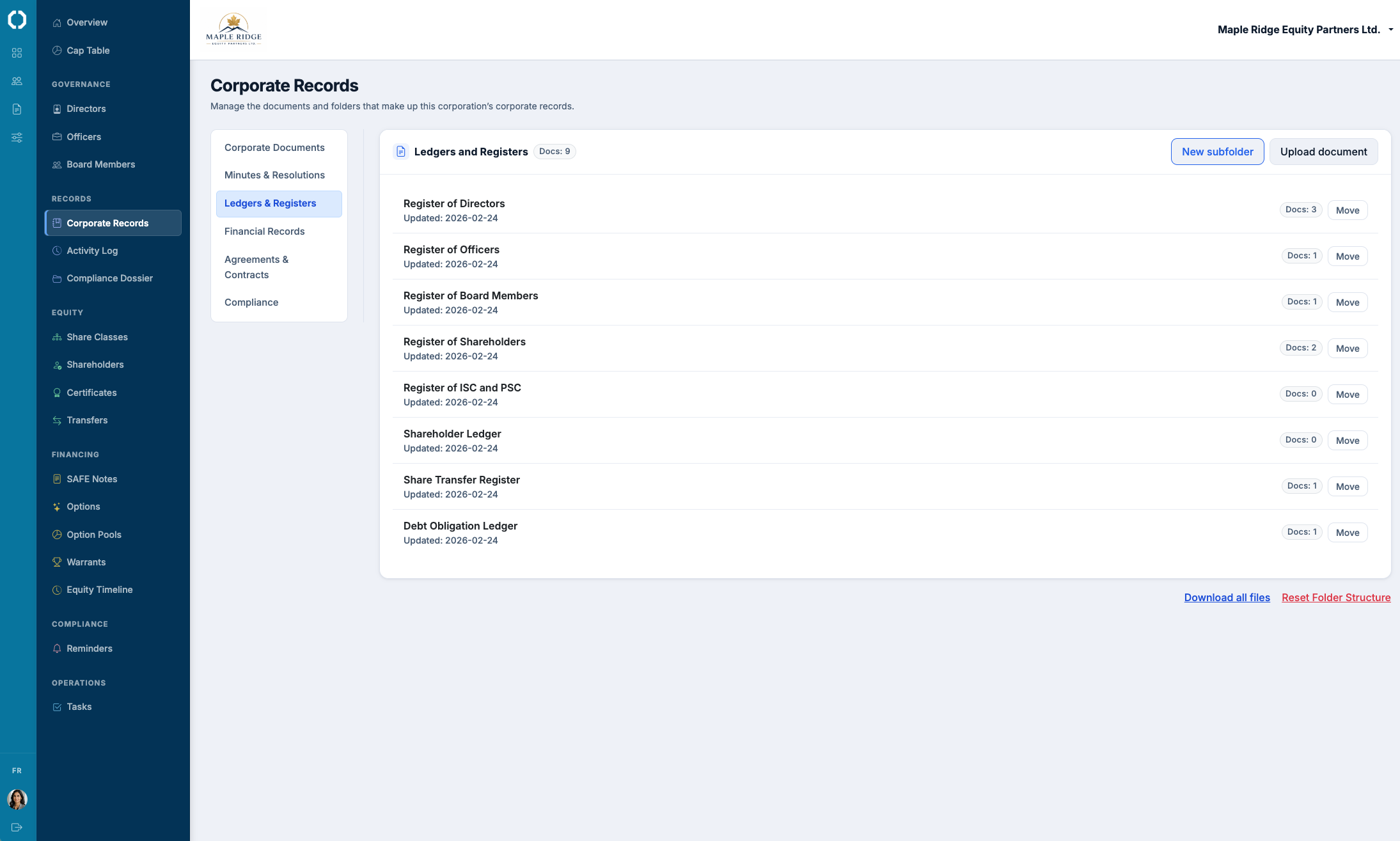
Octelligence's Delaware structure produces a corporate records book diligence counsel expects to see: certificate of incorporation with all amendments, bylaws, stock ledger reconciled to certificates, written consents under § 228, 83(b) elections, Form D and state blue-sky filings, and FinCEN BOI reports.
See Digital Corporate RecordsJurisdiction-aware templates, statutory citations built in, and a record that survives diligence anywhere.