How to issue shares in Massachusetts corporations
Massachusetts is a common state of incorporation for life sciences, biotech, and academic-spinout corporations in the Boston area. The Massachusetts Business Corporation Act (M.G.L. c. 156D) is the controlling statute and follows the Model Business Corporation Act.
| M.G.L. c. 156D § 6.20 | Subscriptions for shares |
|---|---|
| M.G.L. c. 156D § 6.21 | Issuance of shares |
| M.G.L. c. 156D § 6.25 | Form and content of certificates |
| M.G.L. c. 156D § 16.01 | Corporate records |
| M.G.L. c. 156D § 16.02 | Inspection of records by shareholders |
| M.G.L. c. 110A § 402 | Massachusetts Uniform Securities Act exemptions |
- Authorized by the board under M.G.L. c. 156D § 6.21
- Future services and promissory notes permitted as consideration
- Uncertificated shares permitted under § 6.26
- Inspection rights under § 16.02 with proper-purpose standard and 5-business-day notice
- Massachusetts Uniform Securities Act under M.G.L. c. 110A
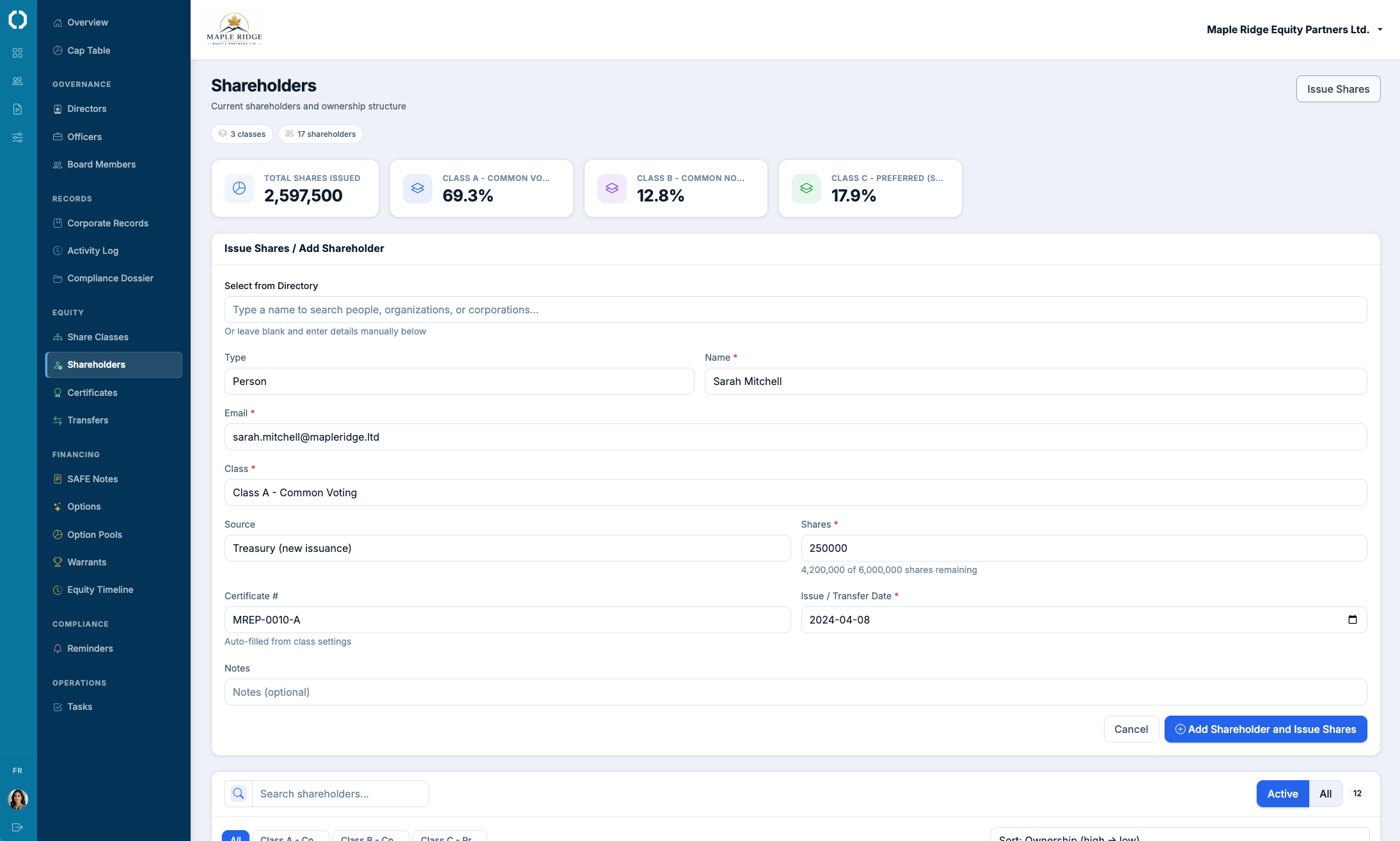
Board authorization under M.G.L. c. 156D § 6.21
Stock issuance is authorized by the board under Massachusetts Business Corporation Act § 6.21. The board determines the consideration. Like other MBCA states, Massachusetts permits broad consideration: tangible or intangible property, services rendered, contracts for services to be performed, promissory notes, and other benefits to the corporation.
Consideration: MBCA pattern with promissory notes permitted
M.G.L. c. 156D § 6.21 permits future services and promissory notes as consideration. The board's determination of consideration adequacy is conclusive absent fraud (§ 6.21(c)). Promissory notes as consideration are valid; the shares may be treated as not fully paid until the note is paid in full if the corporation so elects.
Uncertificated shares under § 6.26
M.G.L. c. 156D § 6.26 permits the corporation to issue uncertificated shares by board resolution. The corporation provides a statement of holdings. Modern Massachusetts-incorporated corporations typically elect uncertificated for some or all classes.
Corporate records and inspection under §§ 16.01 and 16.02
M.G.L. c. 156D § 16.01 requires every corporation to maintain corporate records including articles, bylaws, minutes, consents, and a shareholder list. § 16.02 grants inspection rights on 5-business-day written notice with the demand describing purpose with reasonable particularity. Similar standard to Washington and Florida (all MBCA-based).
Massachusetts Securities Act compliance
Offerings to Massachusetts residents are governed by the Massachusetts Uniform Securities Act (M.G.L. c. 110A). § 402 lists exemptions including limited offering and accredited investor exemptions. NSMIA pre-empts Chapter 110A for Rule 506 offerings but not the notice filing. The Massachusetts Securities Division administers the Act.
Common mistakes
Common Massachusetts-specific failure points in share issuance:
- Operating under M.G.L. c. 156B without confirming whether 156D applies
- Failing to file the Massachusetts Uniform Securities Act notice for offerings to MA residents
- Not maintaining § 16.01 corporate records inventory
- Treating MA case law on fiduciary duties as identical to DE law (the BLS has developed MA-specific authority)
Octelligence handles MBCA-MA specifics in the share register, certificates, board resolutions, and beneficial-ownership filings: jurisdiction-aware templates, statute citations on each record, and the right reconciliation cadence for the corporation.
See Digital Corporate RecordsCommon questions in Massachusetts
Octelligence handles MBCA-MA-specific share issuance: register, certificates, resolutions, and beneficial-ownership records aligned with statute.