How to issue shares in Connecticut corporations
Connecticut is a Model Business Corporation Act state. The Connecticut Business Corporation Act (Conn. Gen. Stat. § 33-600 et seq.) follows MBCA pattern. Connecticut hosts a significant number of insurance and financial-services corporations; its corporate-law regime is otherwise unexceptional.
| Conn. Gen. Stat. § 33-672 | Issuance of shares |
|---|---|
| Conn. Gen. Stat. § 33-682 | Consideration for shares |
| Conn. Gen. Stat. § 33-685 | Stock certificates |
| Conn. Gen. Stat. § 33-945 | Corporate records |
| Conn. Gen. Stat. § 33-946 | Inspection of records |
| Conn. Gen. Stat. § 36b-21 | Connecticut Uniform Securities Act |
- Authorized by the board under Conn. Gen. Stat. § 33-672
- Future services and promissory notes permitted as consideration (§ 33-682)
- Uncertificated shares permitted under § 33-686
- Inspection rights under § 33-946 with proper-purpose standard
- Connecticut Uniform Securities Act under § 36b-21
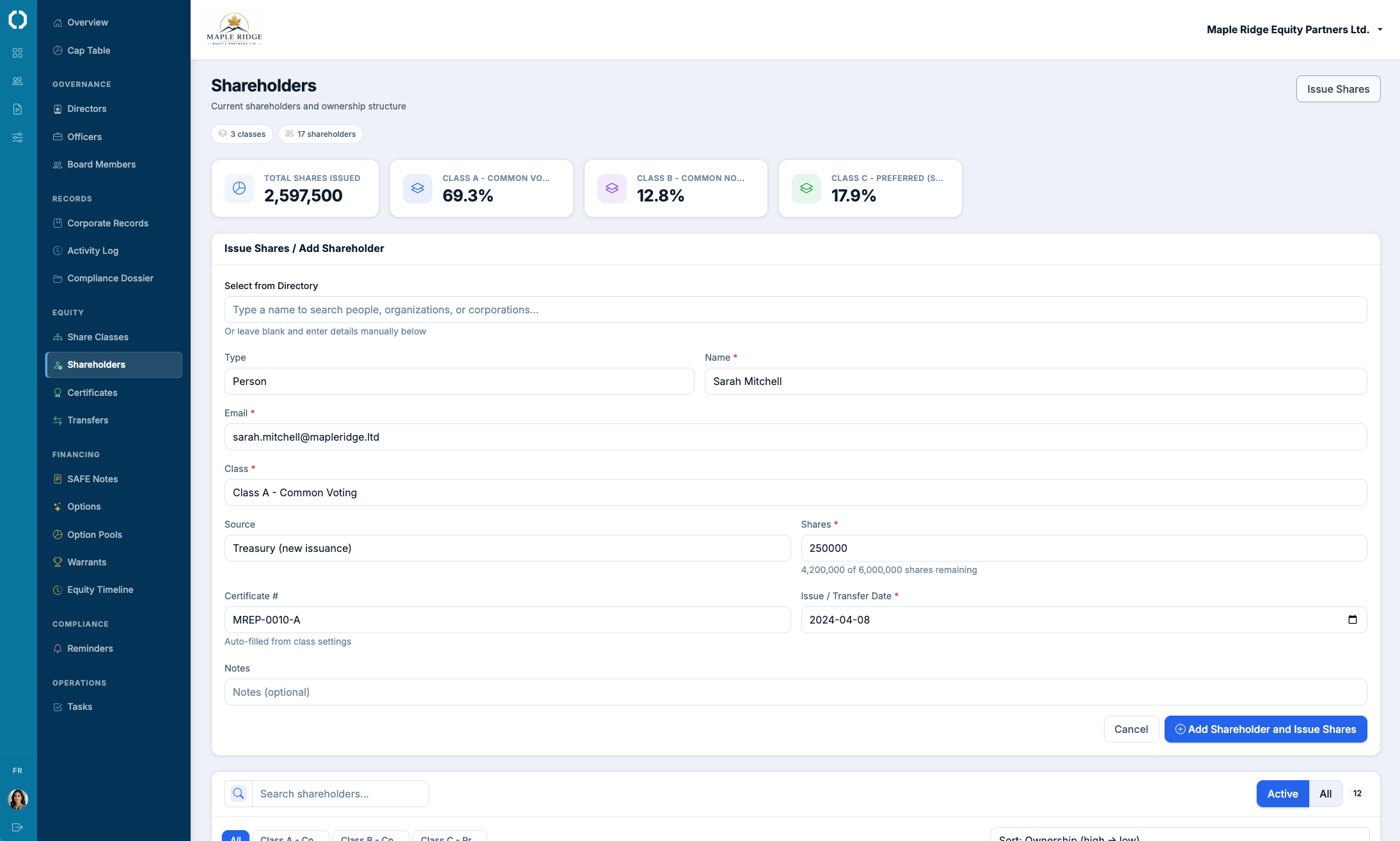
Board authorization under § 33-672
Stock issuance is authorized by the board under Connecticut Business Corporation Act § 33-672. The board determines consideration under § 33-682. Connecticut follows MBCA permissive pattern: cash, property, services rendered, contracts for services to be performed, promissory notes.
Consideration: MBCA pattern
Connecticut permits the same broad MBCA consideration framework as other MBCA states. The board's value determination is conclusive absent fraud.
Uncertificated shares
Conn. Gen. Stat. § 33-686 permits the corporation to issue uncertificated shares by board resolution.
Corporate records and inspection
§ 33-945 requires MBCA-pattern records: articles, bylaws, minutes, consents, shareholder list. § 33-946 grants inspection rights on 5-business-day written notice.
Connecticut Uniform Securities Act
Conn. Gen. Stat. § 36b-21 et seq. governs offerings to Connecticut residents. The Connecticut Banking Department administers the Act. NSMIA pre-empts for Rule 506 offerings but not the notice filing.
Common mistakes
Common Connecticut-specific failure points in share issuance:
- Missing Connecticut Uniform Securities Act notice filings
- Not maintaining the § 33-945 corporate records inventory
- Treating CT case law on fiduciary duties as identical to DE
- Inspection demand without 5-business-day written notice
Octelligence handles CBCA-CT specifics in the share register, certificates, board resolutions, and beneficial-ownership filings: jurisdiction-aware templates, statute citations on each record, and the right reconciliation cadence for the corporation.
See Digital Corporate RecordsCommon questions in Connecticut
Octelligence handles CBCA-CT-specific share issuance: register, certificates, resolutions, and beneficial-ownership records aligned with statute.