How to file an annual return in British Columbia
BC's annual report under BCBCA s. 51 is filed within 2 months of the corporation's anniversary date. The $43 fee is paid to BC Registries (Corporate Registry). The Transparency Register under s. 51.5 (added October 1, 2020) is maintained separately and is the most distinctive feature of BC's regime among Canadian provinces. Administrative dissolution under s. 422 follows extended non-compliance.
| Form | Annual Report |
|---|---|
| Registrar | BC Registries (Corporate Registry) |
| Due date | Within 2 months of the anniversary date |
| Fee | $43 base filing fee |
| Late penalty | $0 direct but administrative dissolution risk |
| Form | Annual Report |
| Registrar | BC Registries (Corporate Registry) |
| Due date | Within 2 months of anniversary date |
| Fee | $43 |
| Late penalty | $0 direct; administrative dissolution under s. 422 |
| Failure to file | Administrative dissolution under BCBCA s. 422 after extended non-filing |
- BC Annual Report under BCBCA s. 51, filed within 2 months of anniversary date
- $43 filing fee with BC Registries
- Transparency Register under s. 51.5 since October 2020: distinctive among Canadian provinces
- Administrative dissolution under s. 422 after 2 consecutive years
- BC's "records office" obligation under s. 42 is separate from the annual report
The BC annual report regime
BC's annual report under BCBCA s. 51 is a relatively simple information filing with BC Registries. The filing confirms the registered office address (and any separate records office address required under s. 42), the directors, and the corporation's continued existence. The filing is due within 2 months of the anniversary date and costs $43.
The s. 51.5 Transparency Register since October 2020
BC's Transparency Register under BCBCA s. 51.5, effective October 1, 2020, requires every BC corporation to maintain a register of individuals who control 25%+ of voting shares or otherwise exercise significant influence. The register is kept by the corporation (not filed with BC Registries) but must be made available for inspection by certain authorized persons including law enforcement, the BC Securities Commission, and FINTRAC. The register is the strictest provincial transparency requirement in Canada in some respects.
BC's separate "records office" obligation under s. 42
Distinct from the registered office, BC requires every corporation to maintain a "records office" under s. 42 (this may be the same as the registered office or different). The records office is where the corporation's books and records are kept and made available for inspection. The annual report confirms the records office address. The bifurcation of registered office (for legal notices) and records office (for record-keeping) is unique to BC among Canadian provinces.
Administrative dissolution under s. 422
Under BCBCA s. 422, the Registrar may dissolve a corporation that has failed to file its annual report for 2 consecutive years. Notice is given to the records office and the directors. Reinstatement under s. 367 is possible by filing all missed annual reports and paying reinstatement fees ($150 plus the back filings).
The 10-year retention period
BC's records retention obligation under s. 364 is 10 years after dissolution (longer than the CBCA's 6-year requirement under s. 226). The 10-year period is the longest among priority Canadian jurisdictions and reflects BC's protective approach to historical corporate records.
Procedure
The annual-return procedure as it applies in British Columbia, in seven steps:
Identify the anniversary date
The annual report is due within 2 months of the anniversary date of incorporation. Confirm by checking the corporation's record on the BC Registry.Confirm directors against the minute book
The annual report confirms the current directors. Confirm against the minute book that the named directors are the directors actually serving.Confirm registered office and records office addresses
The registered office is where legal notices are served. The records office is where books and records are kept. Both are confirmed in the annual report. They may be the same address or different.Update the Transparency Register under s. 51.5
The Transparency Register is kept by the corporation, not filed with BC Registries. However, currency must be maintained. Confirm the register is current at the time of annual report filing.File the annual report through BC Registries
Login to BC Registries Online Filing at bcregistry.gov.bc.ca. Select "File Annual Report". Confirm or update the displayed information. Pay $43 by credit card.Verify the filing acceptance
BC Registries issues an immediate acknowledgment. Retain the acknowledgment with the corporate records.Place the filing in the minute book
The annual report acknowledgment, the BC Registries receipt, and the current Transparency Register are placed in the minute book under the year's annual filings.
Common mistakes
BC's records-office bifurcation and Transparency Register add complexity to what is otherwise a simple annual return. Common errors:
- Confusing the registered office and the records office. Both must be in BC; both must be current; the annual report confirms both.
- Failing to maintain or update the Transparency Register under s. 51.5; the register is the corporation's responsibility and must be current.
- Missing the 2-month-from-anniversary deadline; BC's window is shorter than CBCA's 60 days.
- Allowing administrative dissolution under s. 422; reinstatement is possible but adds cost and complexity.
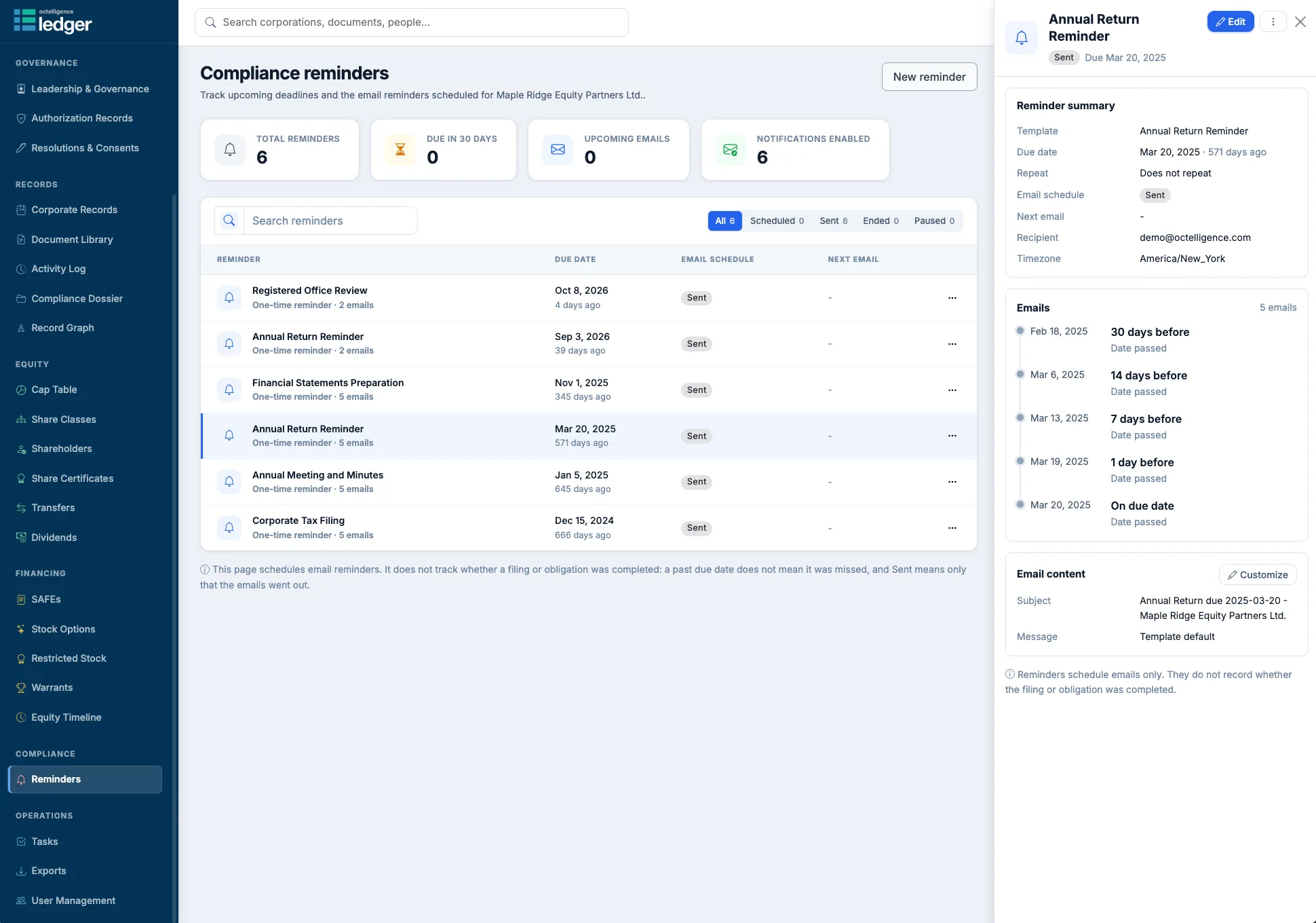
Octelligence tracks the BCBCA annual-return deadline against the corporation's anniversary date or fiscal year-end, surfaces the directors, registered office, and beneficial-ownership information for the filing, and stores the filed return alongside the minute book. The jurisdiction-specific form, fee, and late-penalty rules are built in, with multi-jurisdiction portfolio views for corporations registered in more than one place.
See Digital Corporate RecordsCommon questions in British Columbia
Octelligence calendars the BCBCA annual-return deadline, prepares the filing against the live minute book, and stores the receipt alongside the records it confirms.